Uganda is widely celebrated as the “Primate Capital of the World,” boasting 20 distinct primate species. These include over half of the world’s remaining wild mountain gorillas and more than 5,000 chimpanzees. From the high-altitude montane rainforests of Bwindi Impenetrable National Park to the lush canopy of Kibale Forest, Uganda offers a primate safari experience unlike anywhere else on Earth.
Whether you are embarking on a self-drive 4×4 road trip across Uganda or taking a chauffeur-driven guided safari, navigating Uganda’s terrain requires a vehicle built for rainforest tracks and mountain passes. This complete guide details all major primate species in Uganda, their natural habitats, diets, and exact park locations—along with route insights for a seamless journey.
1. Great Apes: Uganda’s Iconic Giants

Mountain Gorilla (Gorilla beringei beringei)
- Habitat: High-altitude montane rainforests, dense bamboo zones, and steep misty slopes.
- Diet: Herbivorous—primarily leaves, shoots, bamboo, wild celery, roots, and bark.
- Where to See Them:
- Bwindi Impenetrable National Park (Buhoma, Ruhija, Rushaga, and Nkuringo sectors).
- Mgahinga Gorilla National Park (along the Virunga Massif chain).
- Safari Travel Tip: Reaching Bwindi’s southern sectors (Rushaga and Nkuringo) involves navigating steep, unpaved clay roads. Renting a sturdy 4×4 Toyota Land Cruiser LX or Prado with high clearance ensures you handle these mountain passes safely in any weather.

Eastern Chimpanzee (Pan troglodytes schweinfurthii)
- Habitat: Dense tropical rainforests, riverine woodlands, and forest corridors.
- Diet: Omnivorous—mostly ripe fruits, leaves, seeds, insects, and occasionally small mammals.
- Where to See Them:
- Kibale National Park: Home to over 1,500 chimpanzees—the highest primate density in Africa.
- Budongo Forest Reserve (Murchison Falls Conservation Area).
- Kyambura Gorge (Queen Elizabeth National Park).
- Kalinzu Forest and Semuliki National Park.
2. Rare & Endemic Monkeys
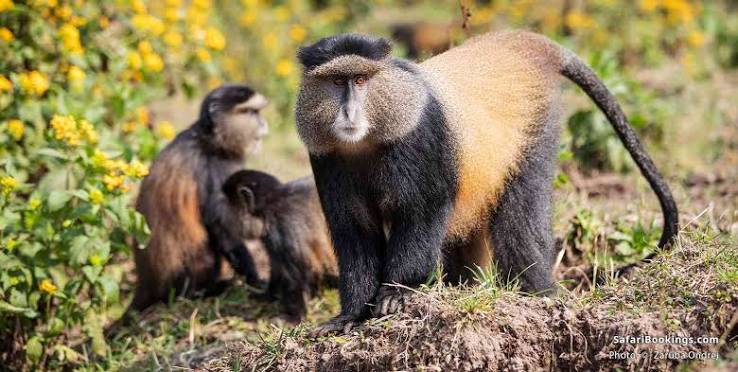
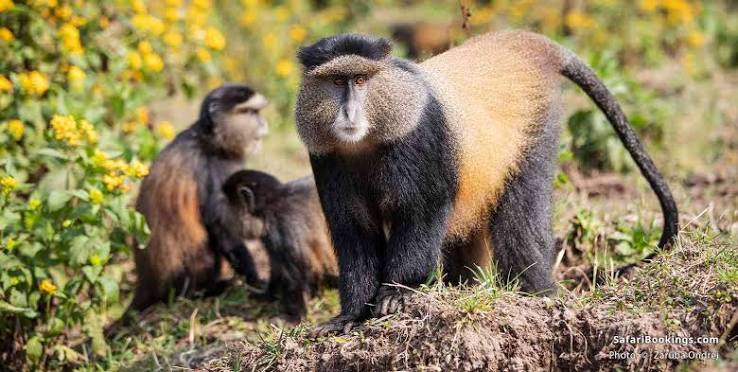
Golden Monkey (Cercopithecus kandti)
- Habitat: High-altitude bamboo forests along volcanic slopes.
- Diet: Bamboo shoots, young leaves, flowers, seeds, and small invertebrates.
- Where to See Them: Exclusively in Mgahinga Gorilla National Park.
- Self-Drive Route Insight: Located in far southwestern Uganda near Kisoro, the road from Kabale to Mgahinga requires low-range 4WD during rainy months.
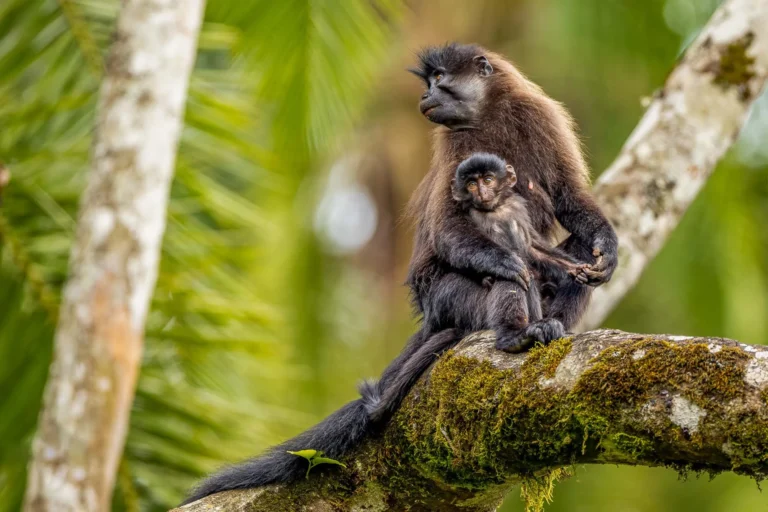
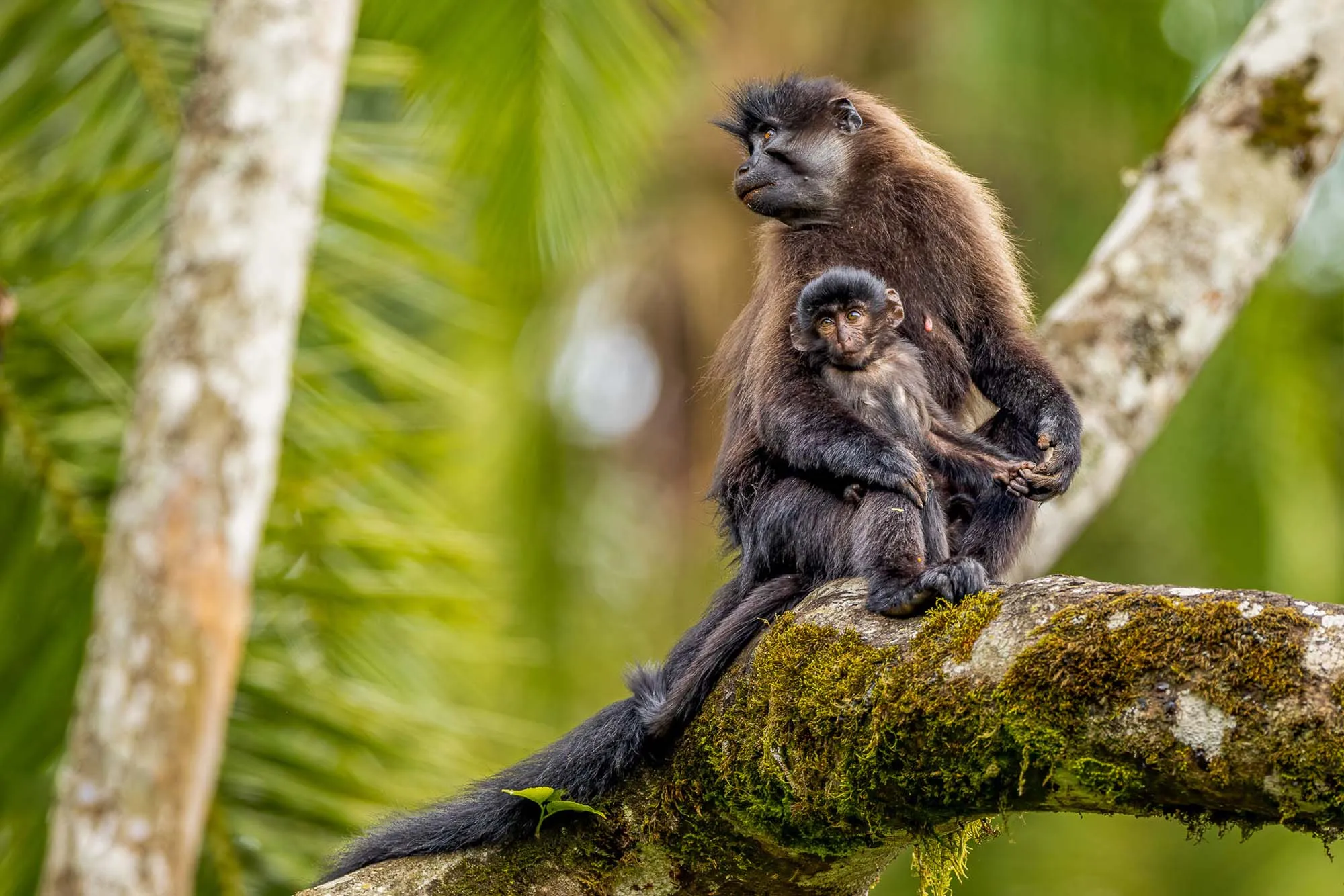
Uganda Mangabey (Lophocebus ugandae)
- Habitat: Mid-altitude semi-deciduous evergreen forests.
- Diet: Hard-shelled seeds, fruits, nuts, and foliage.
- Where to See Them: Mabira Forest Reserve (along the Kampala-Jinja highway) and Kibale Forest.
3. Diurnal Forest Monkeys of Uganda
| Species | Species Details |
|---|---|
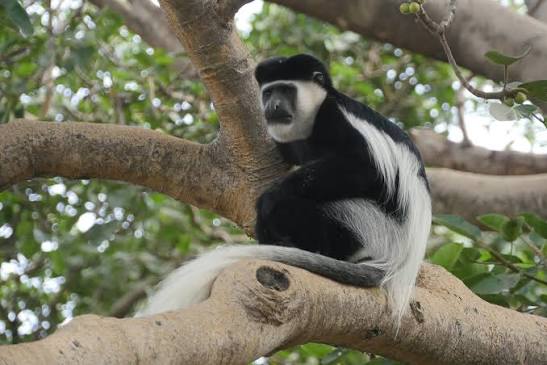
| Black-and-White Colobus |
Primary Habitat: Canopy forest, riverine forest, open woodland Diet: Folivorous (leaves, bark, shoots, seeds) Best Safari Locations: Kibale, Bwindi, Queen Elizabeth, Lake Mburo, Mabira |
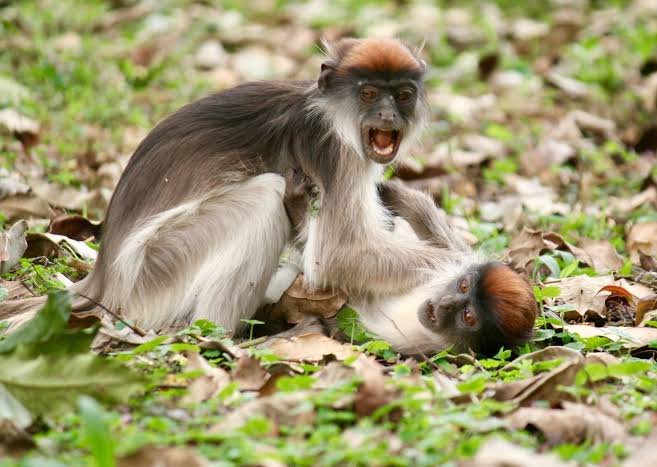
| Uganda Red Colobus |
Primary Habitat: Upper rainforest canopy Diet: Young leaves, flowers, unripe fruit, seeds Best Safari Locations: Kibale National Park & Bigodi Wetland Reserve |
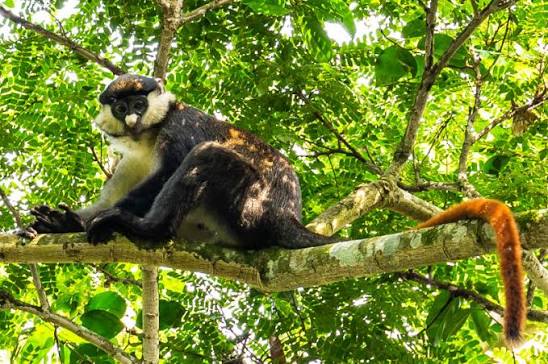
| Red-Tailed Monkey |
Primary Habitat: Lowland rainforests, riverine thickets Diet: Fruits, seeds, flowers, tree gum, insects Best Safari Locations: Kibale, Budongo, Bwindi, Semuliki |
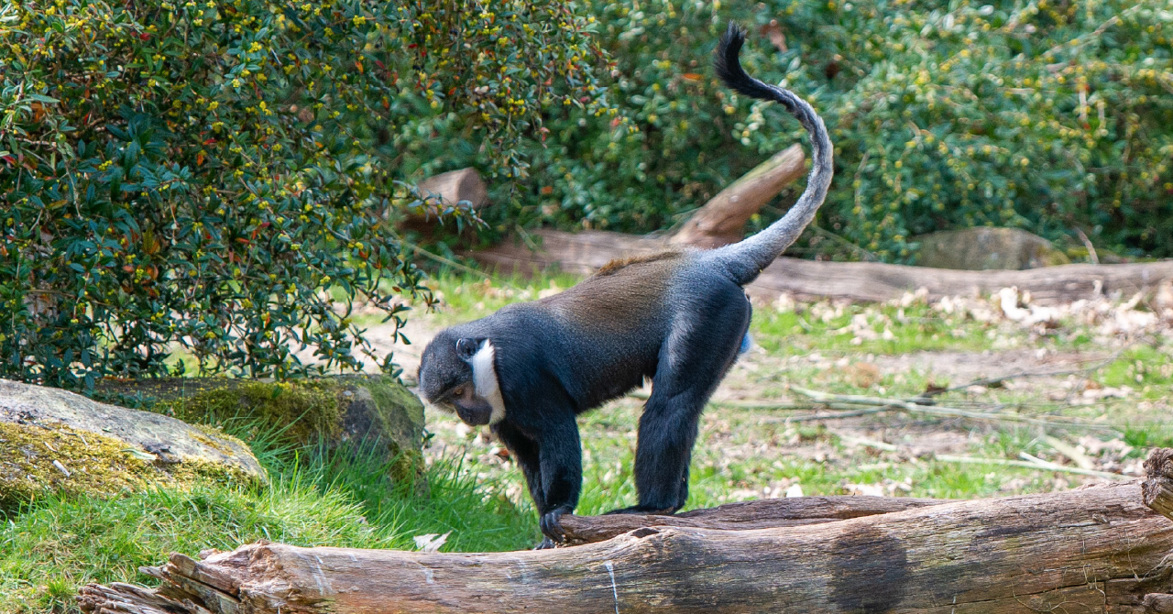
| L’Hoest’s Monkey |
Primary Habitat: Montane rainforests & forest floor Diet: Roots, herbs, seeds, fallen fruit, insects Best Safari Locations: Bwindi, Mgahinga, Kibale, Maramagambo Forest |
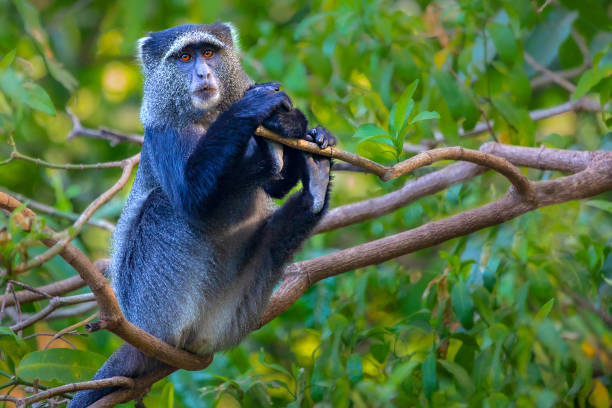
| Blue Monkey |
Primary Habitat: Evergreen forest & montane bamboo belts Diet: Frugivorous (fruits, foliage, invertebrates) Best Safari Locations: Most forested national parks in Uganda |
4. Savanna & Open Country Primates
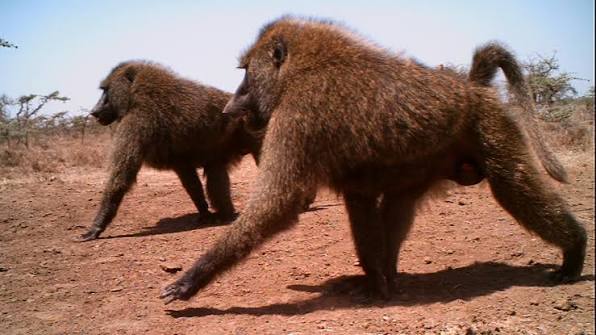
Olive Baboon (Papio anubis)
- Habitat: Open savannas, woodland mosaics, and forest outskirts.
- Diet: Opportunistic omnivores—grasses, tubers, seeds, fruit, small animals, and reptiles.
- Where to See Them: Widespread across Murchison Falls, Queen Elizabeth, Lake Mburo, and along main transit routes.
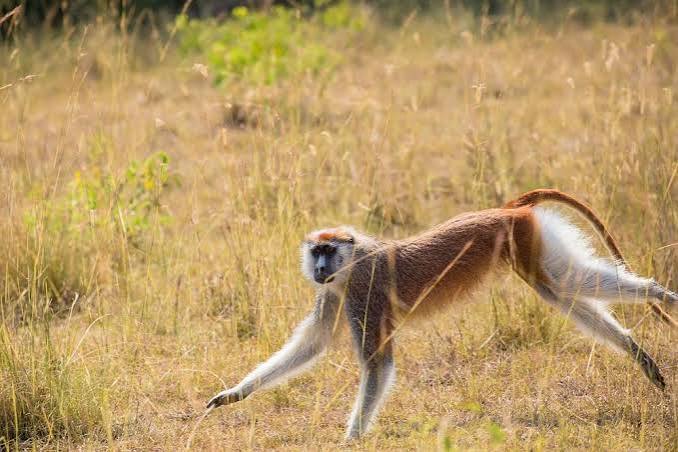
Patas Monkey (Chlorocebus patas)
- Habitat: Dry savanna woodlands, acacia scrublands, and semi-arid plains.
- Diet: Acacia gum, seeds, insects, and succulents.
- Where to See Them: Kidepo Valley National Park, Murchison Falls National Park, and Pian Upe Wildlife Reserve.
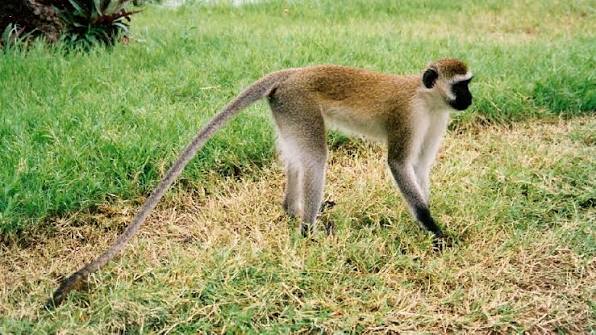
Vervet Monkey (Chlorocebus pygerythrus)
- Habitat: Savanna-woodland borders, lake shores, and forest margins.
- Diet: Flowers, leaves, wild fruits, seeds, and bird eggs.
- Where to See Them: Common across virtually all national parks, safari lodges, and campsite grounds.
5. Nocturnal Primates: Night Safari Creatures
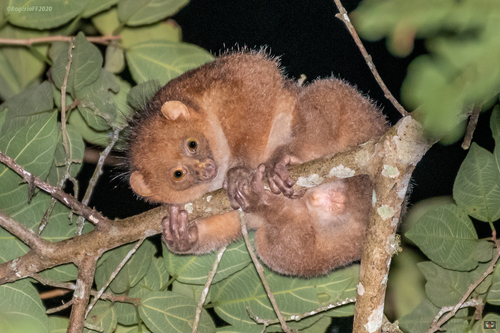
- Pottos (Perodicticus potto): Slow-moving, tree-dwelling nocturnal creatures feeding on tree gum, fruit, and insects. Best spotted during guided night walks in Kibale Forest.
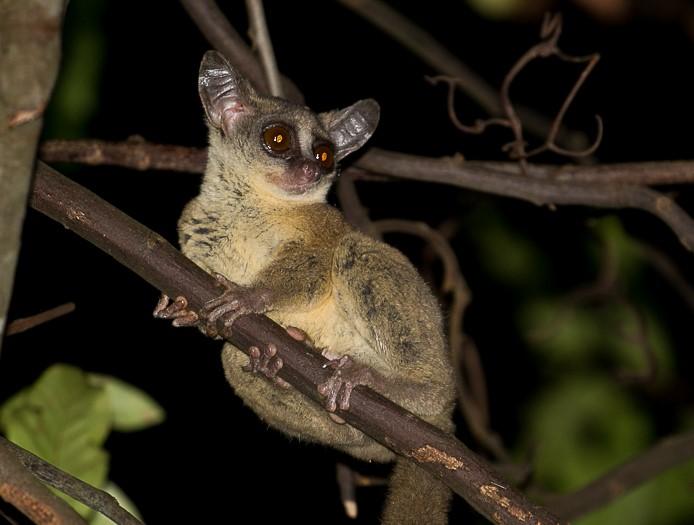
- Bushbabies / Galagos (Greater, Lesser, & Dwarf): Large-eyed nocturnal jumpers feeding on tree sap and insects. Frequently heard calling at night in Kibale, Semuliki, and Lake Mburo.
Self-Drive vs. Guided Primate Safari in Uganda: Which is Right for You?
Self-Drive 4×4 Safari
- Ideal for: Independent travelers, couples, and overland adventurers who want total flexibility over their itinerary.
- Advantages: Complete freedom to stop at crater lakes, villages, and viewpoints, plus full privacy on your journey.
- Requirement: Renting a reliable 4×4 with GPS/Maps, high ground clearance, and 24/7 roadside assistance.
Chauffeur-Guided Safari
- Ideal for: First-time visitors, luxury travelers, families, and wildlife enthusiasts looking for a stress-free experience.
- Advantages: Professional driver-guides handle navigation, dirt roads, park entry gates, and permit briefings while sharing deep local knowledge.
Recommended 4×4 Vehicles for Uganda Primate Safaris
Uganda’s premier primate destinations—such as Bwindi, Mgahinga, and Kibale—are situated in mountainous, heavily forested regions. Standard sedans or two-wheel drives cannot manage the steep gradients, corrugated gravel roads, or muddy tracks after rain.
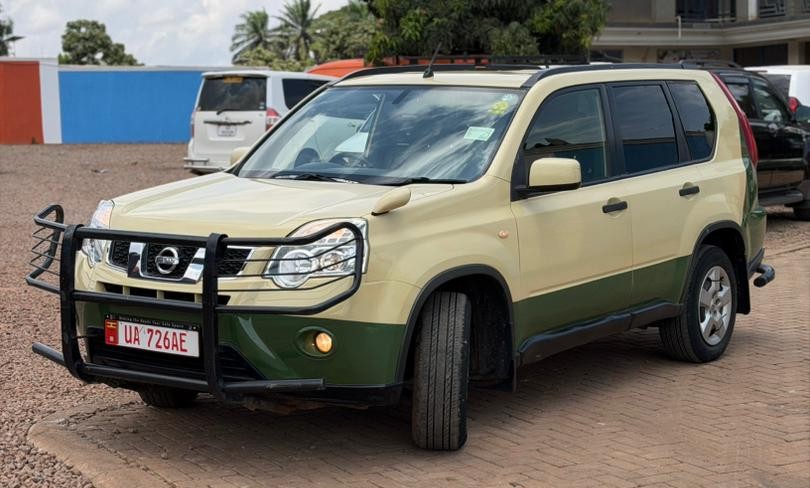
- Nissan X-Trail 4WD: Compact and economical automatic 4WD suited for budget self-drive trips and light off-road travel for 2 passengers.
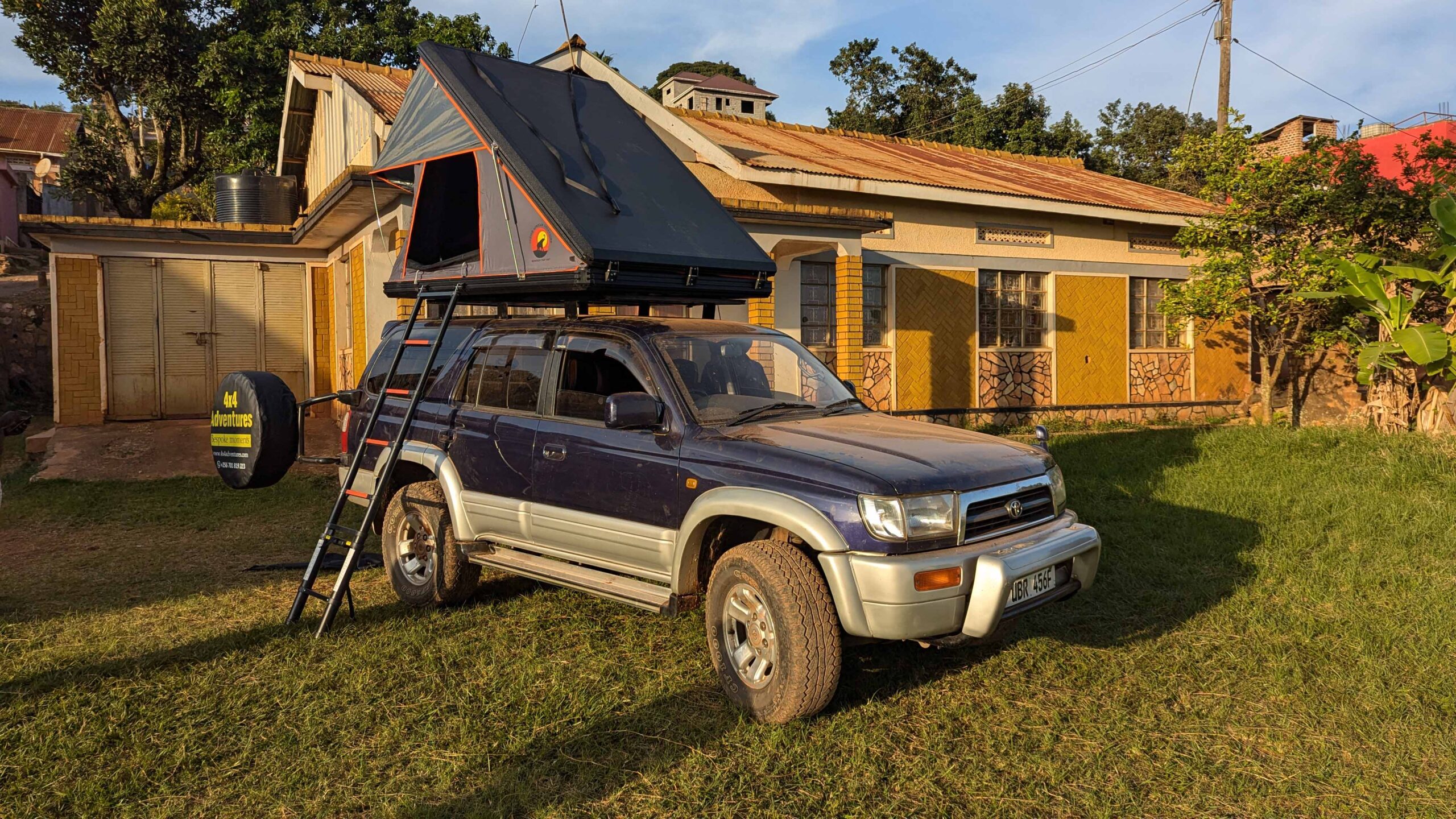
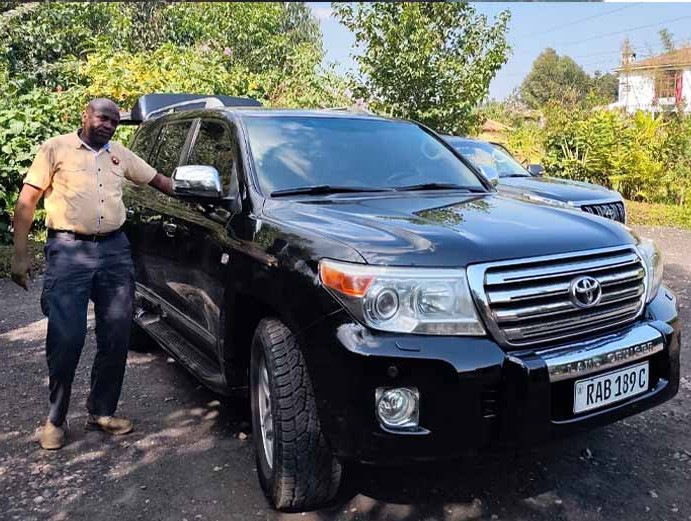
- Toyota Land Cruiser Prado TX/TD: The most popular choice for self-drive safaris. Offers a powerful 4WD engine, high clearance, and options for a pop-up roof or rooftop tent.
- Toyota Land Cruiser Hardtop (70 Series): Heavy-duty, long-haul vehicle built for rough off-road conditions and rugged mountain passes.
Explore Uganda’s Primate Kingdom with 4x4 Car Rentals Uganda
Planning your mountain gorilla or chimpanzee tracking adventure? Rent a fully equipped 4x4 safari vehicle with a pop-up roof or rooftop tent, or book a customized guided primate safari with an experienced local driver-guide.
Book Your 4x4 Safari Vehicle Today at 4x4 Car Rentals Uganda