
4×4 Cross Border Safaris Uganda and Self-Drive Adventures
4×4 Cross Border Safaris Uganda: East Africa is not merely a destination; it is a living, breathing tapestry of dramatic landscapes, legendary wildlife migrations, and untamed wilderness. For the modern adventurer, the true essence of this region cannot be captured from the fixed, sterile windows of a tour bus or through the brief window of a domestic flight. It is felt on the corrugated dirt tracks of the Serengeti, inhaled through the scent of dust and acacia after a sudden savannah rain, and lived out beneath a canopy of southern hemisphere stars.
Welcome to the definitive guide for 4×4 Cross Border Safaris Uganda and Self-Drive Adventures.
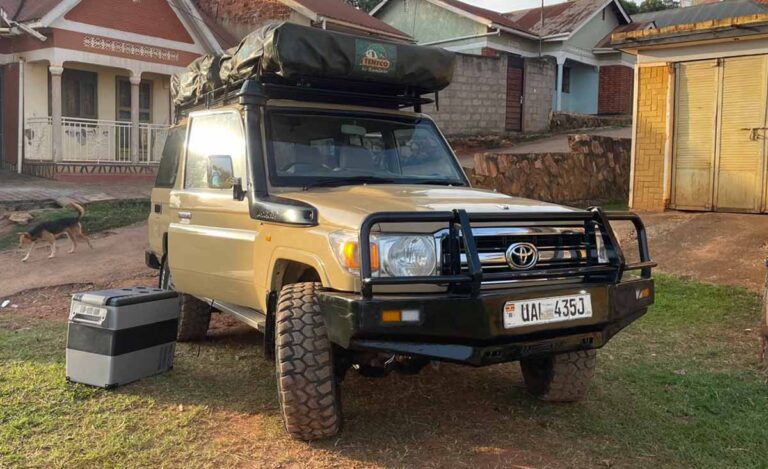
Crossing international boundaries in the heart of East Africa unlocks a seamless, continent-spanning playground. Imagine picking up a rugged, fully equipped 4×4 vehicle in Kampala, Uganda, tracking endangered mountain gorillas in Bwindi Impenetrable National Park, driving across the border into Rwanda’s Volcanoes National Park, traversing the endless plains of the Serengeti and Maasai Mara, and returning via the verdant hills of Burundi or the wildlife-rich reserves of Kenya—all on a single, continuous, life-changing itinerary.
This comprehensive guide is engineered for high-intent travelers, intrepid explorers, and independent overlanders seeking precise, actionable, and exhaustive information. Whether you are planning a self-drive expedition or a guided luxury safari across multiple East African Community (EAC) borders, this page details everything you need to know: selecting the right vehicle, mastering camping and solar setups, navigating cross-border paperwork, securing COMESA insurance, and mapping out legendary multi-country routes.
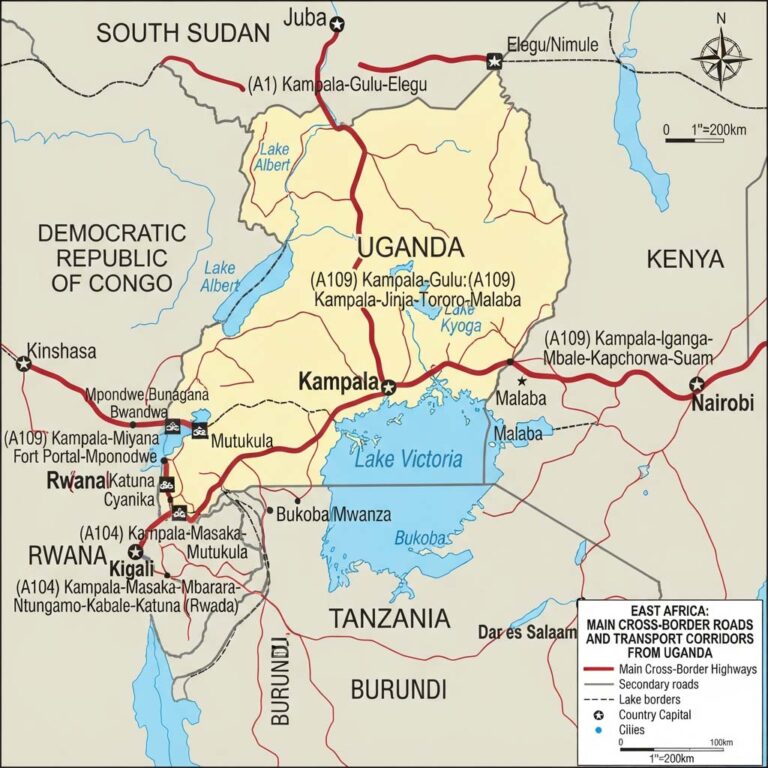
Why Choose a 4×4 Cross-Border Safari Starting From Uganda?
Uganda, affectionately known as the Pearl of Africa, serves as the ultimate strategic launchpad for East African overland expeditions. Centrally located within the East African Community, Uganda boasts a thriving safari infrastructure, competitive vehicle rental rates compared to neighboring hubs, and immediate proximity to some of the planet’s most biodiverse ecosystems.
Strategic Advantages of Starting in Uganda:
- Geographic Centrality: Uganda shares immediate borders with Kenya to the east, Tanzania to the south, Rwanda to the southwest, and the Democratic Republic of Congo and South Sudan to the west and north. This places you within striking distance of the entire East African safari circuit.
- Biodiversity & Primates Capital: Uganda is home to over half of the world’s remaining mountain gorillas, all Big Five animals, and 1,073 bird species. Starting here allows you to anchor your trip with primate trekking before expanding outward into the savannahs of the Serengeti or the Maasai Mara.
- Logistical Excellence: Kampala and Entebbe house top-tier vehicle outfitters specializing in custom-built 4×4 overland fleets outfitted with heavy-duty suspension, dual diesel tanks, specialized all-terrain tires, onboard refrigeration, and complete camping gear.
- Flexible Itineraries: A cross-border rental breaks down artificial geographic borders. You are no longer confined to a single country’s parks; you can follow the Great Migration across the Kenya-Tanzania border or track chimpanzees in Nyungwe Forest (Rwanda) after visiting Kibale Forest (Uganda).
Choosing the Ideal 4×4 Vehicle for an East African Expedition
When you are 500 kilometers away from the nearest paved road, deep inside a national park with wildlife roaming your perimeter, your vehicle is your lifeline. Standard city crossovers or budget rental cars will fail under the harsh demands of East African terrain, which features deep mud ruts during the rainy seasons, razor-sharp volcanic rock, fine abrasive dust, and grueling corrugated tracks.
At 4×4 Car Rentals Uganda, our entire cross-border fleet is meticulously engineered, mechanically serviced, and field-tested for punishing overland conditions. Here are the premier vehicle categories available for cross-border adventures:
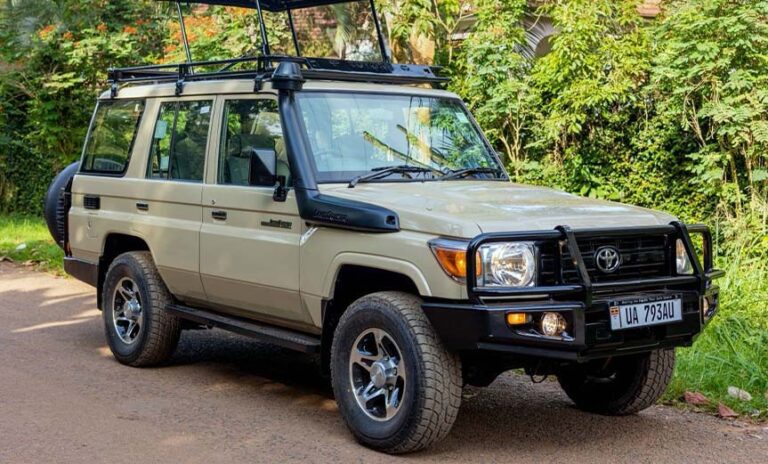
Toyota Land Cruiser LX (Safari Land Cruiser)
- Best For: Hardcore expeditioners, remote safari guides, and groups tackling extreme off-grid tracks where absolute mechanical durability is mandatory.
- Engine & Transmission: Legendary 4.2L 1HZ Diesel or 4.5L V8 Turbo Diesel, paired with a heavy-duty 5-speed manual or 6-speed automatic transmission featuring selectable part-time or full-time 4WD with low-range gearing.
- Key Features: Rugged ladder-frame chassis, rigid live-axle leaf or coil-spring suspension, exceptional ground clearance, factory diff locks, dual fuel tanks, raised air intake snorkel, and a reinforced steel gutter-mounted roof rack built to hold heavy expedition loads and rooftop tents.
- Overland Customization: Outfitted with heavy-duty steel bull bars, electric winches, dual battery systems with power management for portable refrigeration, auxiliary water tanks, high-lift jacks, dual spare wheel carriers, and comprehensive recovery kits.
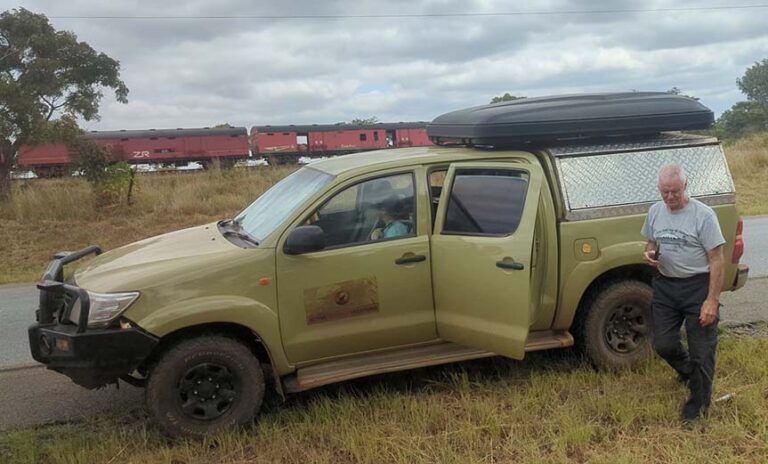
Toyota Hilux Double Cab
- Best For: Travelers wanting modern cabin comfort, advanced safety features, and a versatile rear load bed for camping gear, luggage, and auxiliary equipment.
- Engine & Transmission: 2.8L GD-6 Turbo Diesel engine renowned for incredible low-end torque and fuel efficiency across long highway stretches and heavy off-road tracks.
- Key Features: Shift-on-the-fly 4WD, electronic rear differential lock, hill-start assist control, and trailer sway control.
- Overland Customization: Fitted with lockable aluminum canopy lids, slide-out fridge drawers, rooftop tent mounting, integrated drawer systems for camping gear and tools, and secondary fuel filtration systems to handle variable fuel qualities across remote borders.
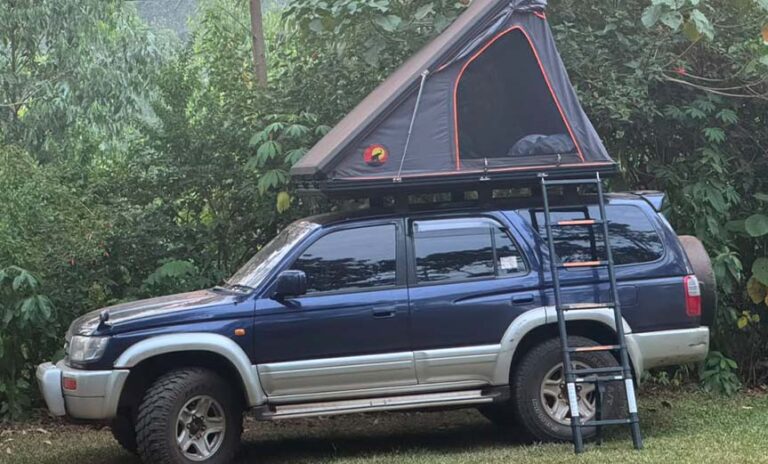
Toyota Hilux Surf (With Rooftop Tent)
- Best For: Budget-conscious adventure travelers and adventurous couples looking for a nimble, pickup-derived 4×4 camper setup with enclosed boot space.
- Engine & Transmission:0L 1KZ-TE Turbo Diesel or 3.4L V6 Petrol, paired with a 4-speed automatic or 5-speed manual transmission featuring selectable 4WD High and Low range.
- Key Features: Robust truck-based chassis, independent front or coil-sprung rear suspension, good ground clearance, spacious enclosed rear boot for luggage security, and a custom roof rack installation supporting a fold-out rooftop tent.
- Overland Customization: Equipped with an integrated camping layout, slide-out cooler/fridge space, dual jerry can holders, basic recovery kit (tow straps and spade), and a quick-deploy rooftop tent complete with a built-in mattress and ladder access.
Camping Sites and Solutions: Sleeping Under the African Stars
One of the defining pleasures of a cross-border 4×4 safari is the absolute freedom of mobile camping. East Africa features an extraordinary network of campsites ranging from rustic, unfenced wilderness bush camps deep inside national parks to luxury eco-lodges with designated overlanding grounds boasting hot showers, Wi-Fi, and communal fire pits.
Rooftop Tents vs. Ground Tents: Which Should You Choose?
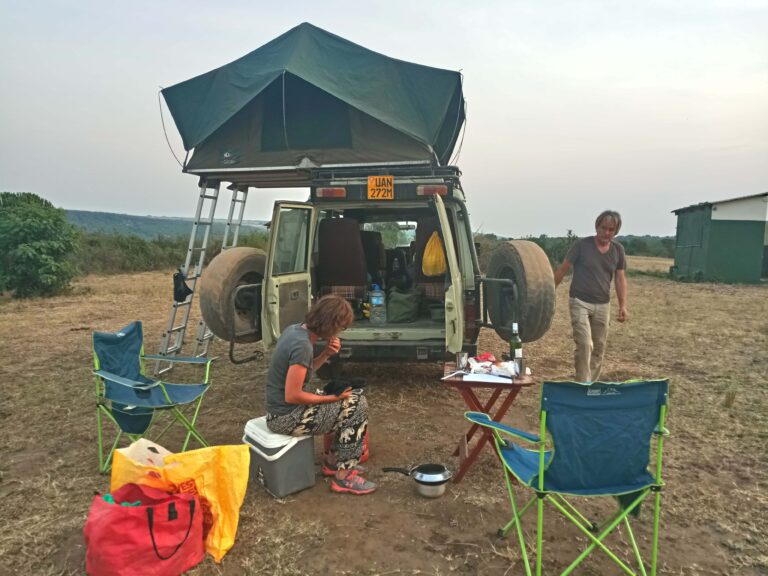
1. Hard-Shell and Soft-Shell Rooftop Tents (RTT)
Rooftop tents are the gold standard for East African overlanding safaris. Mounted securely on heavy-duty roof rack bars across your 4×4 vehicle, they offer unmatched safety, convenience, and comfort.
- Safety from Wildlife: Sleeping elevated 2 meters above the ground provides profound peace of mind when camping in unfenced wilderness areas shared by hyenas, lions, elephants, and leopards.
- Rapid Deployment: Soft-shell tents unfold in under 3 minutes; hard-shell gas-strut models pop open in less than 30 seconds. This is critical when arriving at a campsite late or during a sudden tropical downpour.
- All-Weather Resilience: Built from heavy-duty ripstop canvas, waterproof rainflies, and sealed zippers, RTTs withstand torrential tropical rains and high winds far better than traditional ground tents.
- Integrated Comfort: Each rooftop tent comes equipped with a high-density, moisture-resistant memory foam mattress, allowing you to leave your sleeping bags and pillows neatly packed inside while driving.
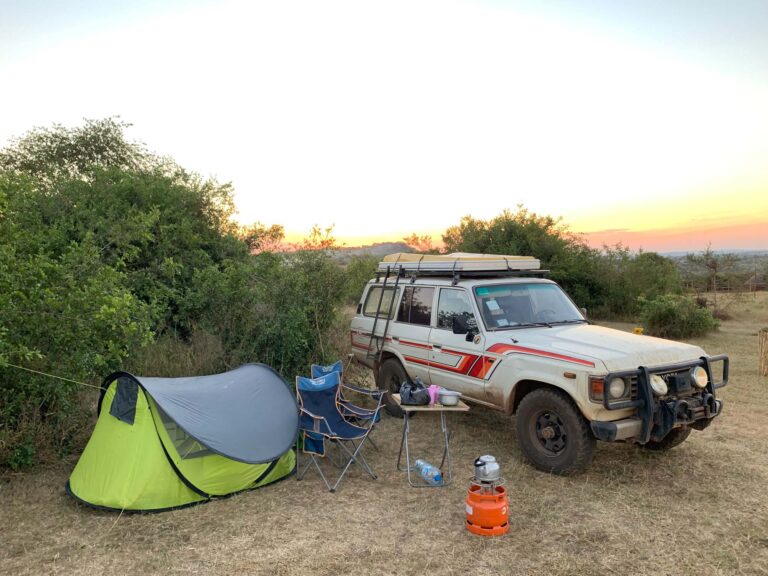
2. Ground Camping Equipment Suites
For travelers who prefer traditional camping or are traveling with larger families requiring auxiliary ground annexes, we provide complete ground camping kits:
- Four-season dome tents with waterproof flysheets and sewn-in groundsheets.
- Self-inflating thermal sleeping mats and camp cots.
- Heavy-duty sleeping bags rated for cold highland temperatures (such as the misty foothills of Bwindi, Nyungwe, or the Ngorongoro Crater rim).
- Standing canvas safari gazebos and windbreak walls for outdoor kitchen setups.
Power, Solar, and Refrigeration Solutions for Remote Expeditions
When exploring remote wilderness areas across Uganda, Kenya, Tanzania, and Rwanda, access to reliable electricity is a luxury. Keeping your camera batteries charged, drone flying, smartphones powered, and food and beverages cold requires a robust, self-sustaining off-grid energy architecture built directly into your rental vehicle.
Our Vehicle Power Ecosystem Includes:
- Dual Battery Systems: Every cross-border safari vehicle is fitted with a secondary deep-cycle auxiliary battery isolated from the main starting battery. This ensures that running lights, charging devices, and refrigerators overnight will never drain your starter battery, guaranteeing you can always turn your ignition key in the morning.
- Portable Monocrystalline Solar Panels: For stationary camping lasting multiple days in remote locations (such as the Central Serengeti or Kidepo Valley), we supply folding 120W to 200W solar blanket kits equipped with MPPT solar charge controllers. These harness equatorial sunlight to continuously top up your auxiliary battery system.
- High-Efficiency 12V Overland Fridges/Freezers: Forget melted ice and spoiled food. Our vehicles are equipped with compressor-driven dual-zone portable refrigerators (such as Engel, ARB, or National Luna models). You can simultaneously freeze your meat and keep your vegetables and drinking water chilled to perfection, no matter how high the ambient savanna temperatures rise.
- Inverters and Multi-Volt Charging Hubs: Integrated 12V to 220V/240V power inverters (300W to 1000W) alongside USB-C fast-charging ports allow you to easily charge laptops, camera battery packs, drone batteries, and power banks directly inside the cabin while driving or at camp.
Essential Camping Kitchen and Gear Inventory
A true self-drive safari relies on self-sufficiency. Every 4×4 cross-border rental from 4×4 Car Rentals Uganda is packed with a comprehensive, professional-grade camping and kitchen inventory neatly organized in custom-fitted rear storage drawers.
What’s Included in Your Expedition Kit:
- Kitchenware & Cooking: 2-burner gas stove (with a refillable 3kg/5kg LPG bottle), complete cookware set (frying pan, saucepans with lids, kettle), stainless steel plates, bowls, mugs, wine glasses, and cutlery sets for up to 6 people.
- Prep & Cleanup: Cutting boards, sharp chef knives, wooden spoons, colander, washing basin, biodegradable dish soap, drying towel, and scouring pads.
- Camp Comfort: Lightweight aluminum camping table, comfortable folding safari chairs with armrests and drink holders, and high-lumen rechargeable LED lantern lights and headlamps.
- Tool & Recovery Kit: Heavy-duty tow rope, long-handled shovel, folding entrenching tool, high-lift farm jack, tire pressure deflation gauge, 12V heavy-duty air compressor, heavy-duty jumper cables, puncture repair kit, wheel spanner, and a comprehensive emergency first-aid kit.
Navigating Cross-Border Documentation, Visas, and COMESA Insurance
Crossing international frontiers with a rental vehicle in East Africa requires careful planning, precise documentation, and adherence to legal protocols. Attempting to cross a border without the correct paperwork will result in rejected entry, heavy fines, or vehicle impoundment.
As experienced cross-border operators, we handle 90% of the administrative preparation before you even turn the ignition key. Here is the breakdown of what is required:
1. The Cross-Border Letter of Authorization (No-Objection Permit)
Rental vehicles cannot legally cross international borders without explicit, notarized clearance from the registered owner. We provide:
- An official Cross-Border Permit / Letter of Authorization stamped and signed by the rental company.
- Certified copies of the vehicle registration book (logbook).
- A specific border clearance letter addressed to customs and immigration authorities at each targeted border post (e.g., Malaba, Busia, Mutukula, Gatuna/Katuna, Cyanika, Namanga, or Isebania).
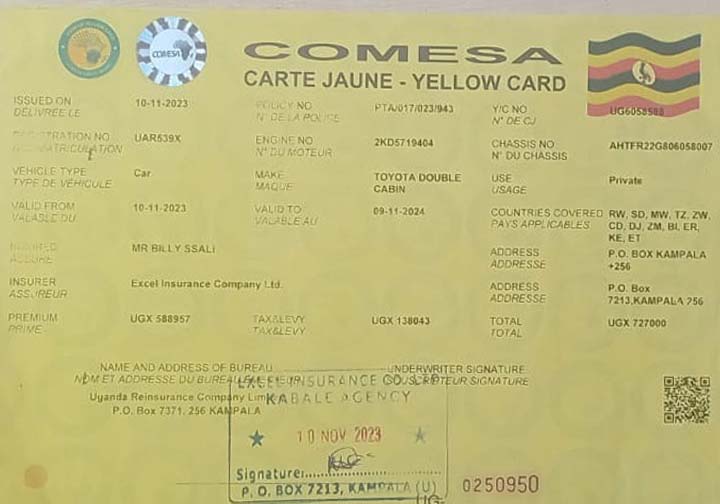
2. COMESA Yellow Card (Third-Party Motor Insurance)
Standard domestic car insurance terminates at the national border. To legally drive a foreign-registered vehicle in neighboring countries, you must possess a COMESA Yellow Card (Common Market for Eastern and Southern Africa).
- This regional third-party liability insurance covers accidents and property damage across multiple participating nations (including Uganda, Kenya, Tanzania, Rwanda, Burundi, Zambia, and Zimbabwe).
- We arrange and issue your multi-country COMESA insurance coverage directly before departure, ensuring seamless compliance at every checkpoint.
3. Temporary Importation Permits (TIP)
When entering a new country, customs officials will issue a Temporary Importation Permit (TIP) for the vehicle.
- Our team prepares all necessary customs declaration paperwork.
- Note: While most EAC countries grant free or low-cost temporary importation for tourist vehicles, certain nations (such as Tanzania) levy specific road tolls, national park transit fees, or municipal entry taxes payable at the border via credit card or local currency.
4. Visas and Personal Travel Documents
- East Africa Tourist Visa (EATV): Highly recommended for travelers visiting Uganda, Kenya, and Rwanda. This single multiple-entry visa costs $100 USD, is valid for 90 days, and allows seamless movement between the three nations without paying individual visa fees at every border crossing. (Note: Tanzania requires separate visa arrangements).
- Valid Passports: Must be valid for at least 6 months beyond your planned return date, with a minimum of 3 blank pages per country visited.
- International Driving Permits (IDP): National driver’s licenses printed in English or accompanied by an official International Driving Permit are accepted across the East African Community.
- Health Certificates: Proof of Yellow Fever vaccination is universally required across East Africa. Depending on your specific route, malaria prophylaxis and anti-malarial precautions are strongly advised.
Legendary 4×4 East African Cross-Border Itineraries From Uganda
To inspire your upcoming adventure, here are three world-class multi-country 4×4 itineraries engineered for high-intent self-drive travelers starting from Uganda.
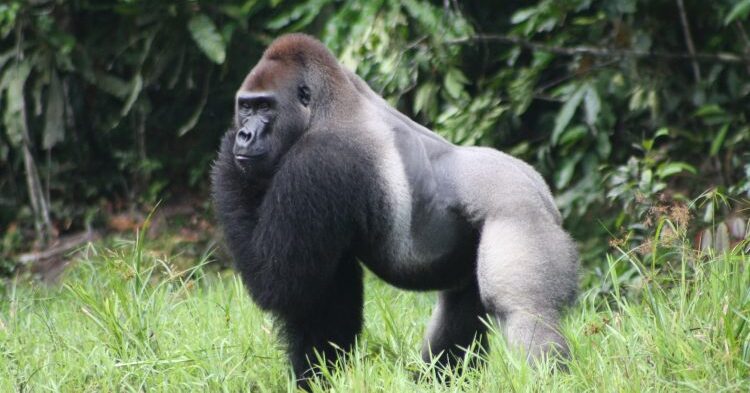
- Duration: 21 Days / 20 Nights
- Route: Entebbe (Uganda) → Lake Mburo → Bwindi Impenetrable National Park → Lake Bunyonyi → Transit/Fly to Kenya → Amboseli National Park → Lake Naivasha → Masai Mara National Reserve → Serengeti National Park (Tanzania) → Ngorongoro Crater → Arusha
Introduction
The ultimate 21-day overland journey connects East Africa’s premier wildlife destinations into a single cross-border adventure. Designed for travelers who want to experience everything, this route bridges Uganda’s cloud forests with the open savannas of Kenya and Tanzania.
Day-by-Day Route Overview
- Days 1–2: Arrive in Entebbe, inspect your 4×4 rooftop tent vehicle, gear up, and take a gentle shake-down drive west to Lake Mburo National Park for bush camping among zebras and impalas.
- Days 3–5: Drive through the terraced Kigezi highlands to Bwindi Impenetrable National Park (Rushaga or Buhoma sector). Spend an intensive day trekking Mountain Gorillas on foot. Celebrate the encounter with two nights of lakeside camping on the shores of Lake Bunyonyi.
- Days 6–9: Cross eastward into Kenya to Amboseli National Park. Set up camp beneath Mount Kilimanjaro, spending two days tracking elephant herds across dry dusty basins and papyrus swamps.
- Days 10–13: Drive across the Great Rift Valley past Lake Naivasha to the Masai Mara National Reserve. Spend four full days bush camping at Sekenani or Talek, executing early-morning game drives focused on big cats and river crossings.
- Days 14–18: Cross the border into Tanzania’s northern circuit. Drive into the Serengeti National Park, camping at Seronera and Lobo campsites. Follow mobile wildebeest herds across the infinite plains.
- Days 19–21: Ascend into the Ngorongoro Conservation Area, setting up camp on the crater rim at Simba Campsite. Descend 600 meters to the caldera floor for black rhino tracking before concluding your expedition in Arusha.
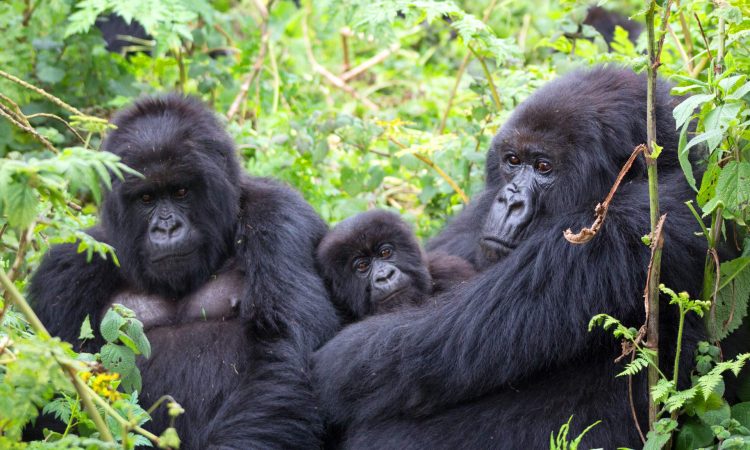
- Duration: 14 Days / 13 Nights
- Route: Arusha → Tarangire National Park → Ngorongoro Crater → Central Serengeti → Northern Serengeti → Flight/Transit to Entebbe → Bwindi Impenetrable National Park → Entebbe
Introduction
A focused 14-day itinerary tailored for travelers who want to combine Tanzania’s famous Northern Safari Circuit with gorilla trekking in Uganda. Experience ancient baobab forests, high-density predator hunting grounds, volcanic calderas, and rainforest gorilla treks.
Day-by-Day Route Overview
- Days 1–2: Pickup your 4×4 in Arusha and drive to Tarangire National Park. Camp among giant baobabs while tracking large elephant herds and tree-climbing pythons along the Tarangire River.
- Days 3–4: Drive up the Rift Valley escarpment to the Ngorongoro Crater rim. Camp at Simba Site and take an early morning descent into the crater bowl for black rhinos, flamingos, and golden jackals.
- Days 5–8: Journey into the Serengeti National Park. Spend four days self-driving through the Central Seronera Valley and Kopjes, camping under wild, un-fenced night skies.
- Days 9–10: Transit through Arusha/Nairobi to Entebbe, Uganda. Take your 4×4 vehicle through the lush countryside toward the mist-shrouded ridges of Bwindi.
- Days 11–14: Complete your Mountain Gorilla trek in Bwindi. Spend your post-trek afternoon relaxing along Lake Bunyonyi before returning to Entebbe via the Equator landmark.
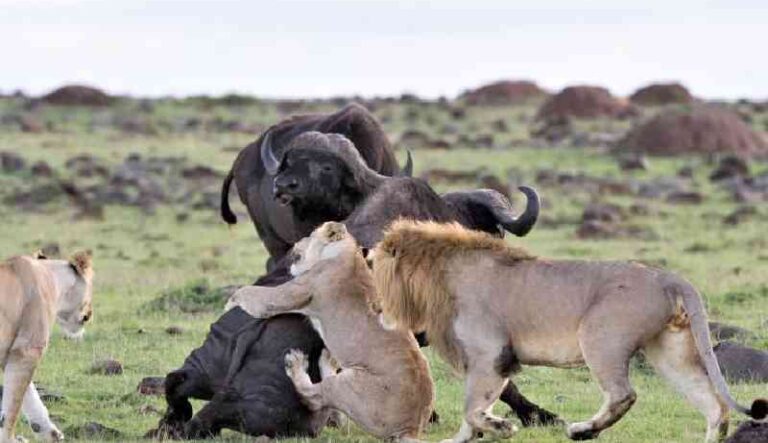
- Duration: 12 Days / 11 Nights
- Route: Nairobi → Amboseli National Park → Lake Nakuru National Park → Masai Mara National Reserve → Transit/Cross to Uganda → Bwindi Impenetrable National Park → Entebbe
Introduction
Fast-paced and wildlife-dense, this 12-day self-drive route highlights the contrast between Kenya’s open, predator-rich savannas and Uganda’s dense montane jungles. It is an ideal route for wildlife photographers keen on capturing big cats, elephants, and primates.
Day-by-Day Route Overview
- Days 1–3: Depart Nairobi in your rooftop tent 4×4, heading south to Amboseli National Park. Set up camp with views of Mount Kilimanjaro and explore the swamp routes populated by big-tusked bull elephants.
- Days 4–5: Drive northwest across the Great Rift Valley to Lake Nakuru National Park. Camp near the lake shore, scanning for white and black rhinos, tree-climbing lions, and Rothschild giraffes.
- Days 6–8: Drive west to the Masai Mara National Reserve. Spend three days navigating the Mara Triangle and Mara River, pitching your rooftop tent at wilderness river campsites.
- Days 9–12: Transit across into Uganda, heading directly to Bwindi Impenetrable Forest. Tackle steep mountain tracks before embarking on your gorilla trek. Conclude the trip with a scenic drive back to Entebbe.
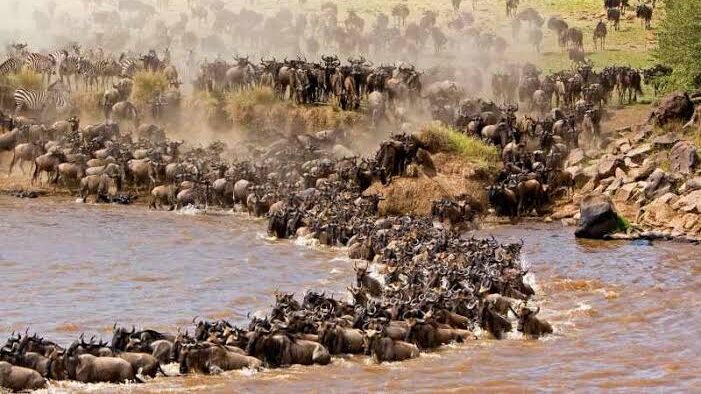
- Duration: 16 Days / 15 Nights
- Route: Entebbe → Bwindi Impenetrable National Park → Lake Mutanda → Transit to Kenya → Masai Mara National Reserve → Serengeti National Park → Ngorongoro Crater → Kilimanjaro/Arusha
Introduction
Built around the movement of the Great Wildebeest Migration, this 16-day expedition pairs the thrill of tracking vast migratory herds across the Mara-Serengeti ecosystem with a deep-forest trek to meet Mountain Gorilla families in southwestern Uganda.
Day-by-Day Route Overview
- Days 1–4: Begin in Uganda with a scenic 4×4 drive to Bwindi Impenetrable National Park. Trek habituated mountain gorillas, then camp along the serene, volcanic shoreline of Lake Mutanda.
- Days 5–8: Fly or drive across to Kenya’s Masai Mara. Spend four days following the migration corridors, monitoring riverbank crossing points, and setting up camp at riverfront campsites.
- Days 9–13: Cross into Tanzania’s Serengeti National Park via the Isebania border. Spend five full days following wildebeest herds across the Seronera plains, Western Corridor, and northern Kopjes.
- Days 14–16: Conclude at the Ngorongoro Conservation Area. Camp on the high crater rim, descend into the caldera floor for a morning game drive, and finish your trip in Arusha.
Essential Safety, Driving, and Etiquette Tips for Cross-Border Overlanding
Driving across East Africa is an exhilarating adventure, but it requires situational awareness, respect for local customs, and adherence to regional driving regulations.
- Drive on the Left: Uganda, Kenya, Tanzania, Rwanda, and Burundi all drive on the left side of the road (British colonial legacy). Right-hand drive vehicles are standard.
- Speed Limits & Wildlife Hazards: Speed limits are strictly enforced near settlements (usually 50 km/h) and open highways (80–100 km/h). Exercise extreme caution during dusk, dawn, and nighttime driving due to unlit livestock, pedestrians, cyclists, and roaming wildlife inside national parks.
- Cash & Currency Management: While credit cards are accepted in major urban hotels and supermarkets, cash is king throughout remote safari areas and border posts. Carry a mix of US Dollars (printed strictly from the year 2013 or newer, clean and unblemished) and local currencies (Ugandan Shillings, Kenyan Shillings, Tanzanian Shillings, and Rwandan Francs) for park fees, fuel, local markets, and camp tips.
- Communication & Navigation: Do not rely solely on cellular data or online maps. Download offline navigation applications (such as Maps.me, Tracks4Africa, or Gaia GPS) which contain highly detailed tracks, campsite coordinates, fuel stations, and water points across remote East African terrain. We provide local SIM card setups and satellite communication rental options upon request.
Why Book Your Cross-Border 4×4 Safari with 4×4 Car Rentals Uganda?
Planning a multi-country expedition across East Africa requires a trusted, experienced, and professionally equipped partner. Here is why independent travelers, film crews, and adventure seekers consistently choose 4×4 Car Rentals Uganda:
- Meticulously Maintained Fleet: Every vehicle undergoes a rigorous 50-point mechanical inspection before every cross-border departure.
- 24/7 Roadside Assistance & Backup: In the rare event of mechanical trouble anywhere across our operating region, our mobile technician network and regional support partners ensure rapid assistance or vehicle replacement.
- Transparent Pricing & No Hidden Fees: Comprehensive quotations that clearly outline cross-border permit costs, COMESA insurance, camping gear inventories, and unlimited mileage options.
- Tailored Itinerary Planning: Our team of seasoned safari experts can assist you in mapping out complex multi-country itineraries, securing park permits (such as gorilla permits in Uganda and Rwanda), and booking exclusive campsites across East Africa.
Call to Action
Book Your East African Overland Adventure Today!
The untamed wilderness of East Africa is calling.
Whether you envision watching the sun set over the Serengeti plains from the comfort of your rooftop tent, tracking gorillas through the misty jungles of Bwindi and Volcanoes, or navigating the scenic mountain passes of Kenya and Burundi, your journey begins here.
Do not leave your dream expedition to chance. Partner with the region’s premier cross-border 4x4 specialists.
- • Email Us: info@4x4carrentalsuganda.com
- • Call / WhatsApp: +256 789 741 049
- • Visit Our Office: Plot 112 Ssemakula Close, Namasuba, Entebbe-Kampala Highway, Kampala, Uganda