
BOOK AND PLAN A GORILLA TREKKING SAFARI IN UGANDA
Book and Plan a Gorilla Trekking Safari In Uganda, 4×4 Rental, Trekking Routes, Permits & The Complete Travel Guide
Uganda is home to more than half of the world’s remaining mountain gorillas, and trekking through the misty forests of Bwindi Impenetrable National Park or the volcanic slopes of Mgahinga to sit within feet of a wild gorilla family is one of the most extraordinary wildlife experiences on Earth. This guide walks you through everything you need to plan a gorilla trekking safari in Uganda — from securing your gorilla permit and choosing the right trekking route, to renting a reliable 4×4 vehicle for the drive into the southwest, picking the right lodge or campsite, and building an itinerary that actually works. Use the enquiry form below to start planning your trip, or scroll down for the full route-by-route, lodge-by-lodge breakdown.
START PLANNING YOUR TREK — REQUEST A FREE QUOTE
Fill in the enquiry form below and our safari team will reply within 24 hours with a tailor-made itinerary, gorilla permit availability, and a 4×4 rental quote.
Prefer to talk it through? Call or WhatsApp our reservations desk, or email us directly — we book gorilla permits, 4×4 rentals & safari guides, lodges and full safari itineraries every single day and can hold provisional permit dates while you decide.
Why Plan Your Gorilla Safari With Us
- Official permit booking agents — we buy gorilla permits directly through the Uganda Wildlife Authority (UWA), so you never pay inflated third-party mark-ups.
- Fleet of self-drive & chauffeured 4×4s — Toyota Land Cruisers, RAV4s and Land Cruiser Prados fitted for Uganda’s rural roads, with rooftop tents available.
- Handpicked lodges and campsites — vetted across every price tier in Bwindi, Mgahinga and along the transit routes.
- Local, on-the-ground guides — Ugandan safari specialists who know each trekking sector personally.
- No hidden costs — permit price, park fees, vehicle rental and accommodation are quoted upfront.
What’s In This Guide
- Why Go Gorilla Trekking in Uganda
- Best Time to Book Your Gorilla Trek
- Gorilla Trekking Permits — Cost & How to Book
- Gorilla Trekking Routes & Sectors in Bwindi & Mgahinga
- 4×4 Vehicle Rental for Your Uganda Safari
- Recommended Gorilla Trekking Safari Packages
- Gorilla Trekking Cost Breakdown
- Where to Stay — Lodging Options by Budget
- Camping Options for Gorilla Trekking Safaris
- What to Pack for Gorilla Trekking
- What to Expect on Trekking Day
- Photography Tips for Your Gorilla Trek
- Rules, Etiquette & Fitness Requirements
- Getting to Uganda & Travel Logistics
- Frequently Asked Questions
Why Go Gorilla Trekking in Uganda
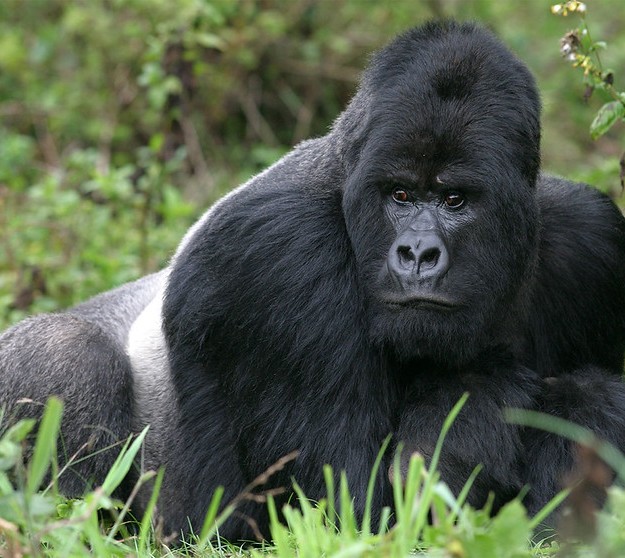
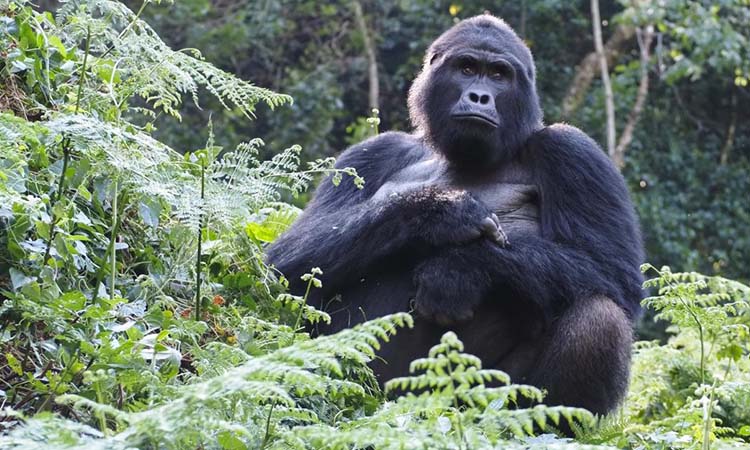
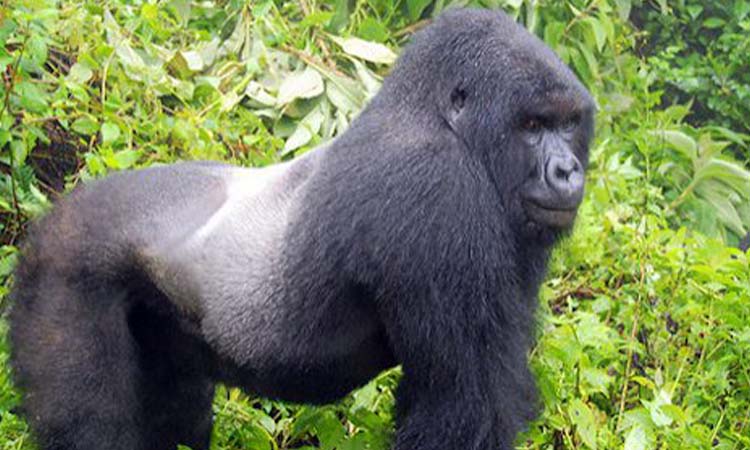
Uganda is, alongside Rwanda and the Democratic Republic of Congo, one of only three countries on Earth where you can trek to see mountain gorillas in the wild. Of the roughly 1,063 mountain gorillas left, more than 459 live inside Uganda’s borders — the majority in Bwindi Impenetrable National Park, with a smaller population on the Ugandan side of the Virunga volcanoes in Mgahinga Gorilla National Park. Unlike a scripted zoo encounter, a Uganda gorilla trek takes you on foot through dense montane rainforest, following trackers who have located a habituated gorilla family that morning, until you are standing a few metres from a silverback, his family, and their infants going about a completely normal day in the forest.
Every dollar spent on a gorilla permit also funds the conservation effort that has brought mountain gorillas back from the brink — the species was reclassified from Critically Endangered to Endangered in 2018, one of very few great ape conservation success stories anywhere in the world, driven in large part by tourism revenue that gives local communities a direct financial stake in protecting the forest rather than clearing it. A portion of every permit fee is shared with the parishes bordering Bwindi and Mgahinga, funding schools, health clinics and clean water projects, which is why your choice to trek in Uganda has a tangible conservation impact beyond the experience itself.
Uganda has built a reputation as the best-value, most flexible gorilla trekking destination in East Africa. Permits are cheaper than in Rwanda, the trekking sectors are more varied (from the gentler slopes of Buhoma to the steep, remote trails of Nkuringo), and Uganda can easily be combined in a single trip with chimpanzee trekking in Kibale Forest, white-water rafting in Jinja, or a classic savanna game drive in Queen Elizabeth or Murchison Falls National Park. This is exactly why so many travellers now search for a single, well-organised itinerary that combines the trek itself with reliable ground transport — which is where a self-drive or chauffeured 4×4 rental becomes essential, since Uganda’s southwestern parks sit 8–10 hours from Entebbe on roads that are only fully manageable in a proper 4-wheel-drive vehicle.
Uganda vs Rwanda vs Congo — A Quick Comparison
Many first-time trekkers ask whether to book in Uganda or Rwanda. Uganda’s gorilla permit currently costs significantly less than Rwanda’s, the parks are larger and less crowded, and Uganda offers a genuine wilderness feel with the option of longer, more physically varied treks. Rwanda’s Volcanoes National Park is more convenient if you only have 2–3 days and want to fly in and out of Kigali quickly. The Democratic Republic of Congo’s Virunga National Park is the cheapest option but carries higher security and logistical risk. For most travellers planning a full Uganda safari that also includes wildlife, culture and adventure activities, Uganda offers the best overall value and experience.

Best Time to Book Your Gorilla Trek
Gorilla trekking in Uganda is possible year-round because the gorillas live in rainforest, not savanna, and their behaviour does not change dramatically with the seasons. That said, timing your trip well affects trail conditions, permit availability and price.
Dry Seasons (Best Trekking Conditions)
- June to September — the long dry season and the most popular trekking window. Trails are firmer, forest floors less slippery, and this period aligns with Northern Hemisphere summer holidays, so book permits 4–6 months ahead.
- December to February — a shorter dry spell, quieter than the mid-year peak, with excellent visibility and slightly easier availability on permits and lodges.
Wet Seasons (Lower Cost, Fewer Crowds)
- March to May and October to November — rain is more frequent, trails can be muddy and steep sections more strenuous, but the forest is lush, birdlife is exceptional, and many lodges drop their rates by 20–30%. Some operators also discount permits during the April, May and November low season.
How Far in Advance to Book
Uganda Wildlife Authority issues a limited number of gorilla permits per day per trekking group (typically 8 permits per habituated gorilla family, or 4 for gorilla habituation experience groups). During July–September and the Christmas/New Year period, permits sell out 4 to 6 months in advance. For any other time of year, 2–3 months’ notice is usually enough, but booking your 4×4 rental and lodge at the same time as your permit is strongly recommended, since accommodation near the trailheads is limited and fills up alongside permit demand.
Gorilla Trekking Permits — Cost & How to Book
A gorilla trekking permit is a non-negotiable requirement to trek in Uganda, and it is the single most important booking to secure early. The permit grants you one hour with a habituated gorilla family, accompanied by armed rangers, trackers and a guide.
Current Permit Pricing
| Category | Approximate Price (per person) |
| Foreign Non-Resident | US $800 |
| Foreign Resident (Uganda work permit holder) | US $700 |
| East African Community Citizen | UGX 250,000 |
| Gorilla Habituation Experience (Rushaga sector) | US $1,500 |
Prices are set by the Uganda Wildlife Authority and can change year to year — we always confirm the current rate at the time of booking. Permit prices include park entry for the trekking day, ranger and tracker fees, and the guided trek itself; they do not include transport, accommodation, meals or tips.
How the Booking Process Works
- Choose your trekking sector and preferred date (see the routes section below).
- We submit your booking to UWA with passport details, and pay the permit in full to secure your place — permits are only guaranteed once paid.
- You receive a confirmed permit reference number, which you carry (with your passport) on trekking day.
- We coordinate your 4×4 transfer or rental and accommodation around the confirmed permit date.
Because permits are allocated to specific gorilla families in specific sectors on specific days, your accommodation and vehicle need to be arranged for that exact location — this is why booking permits, lodging and a 4×4 together, rather than separately, avoids the common mistake of arriving at the wrong sector on trekking morning.
Gorilla Habituation Experience
For travellers who want more than one hour, the Gorilla Habituation Experience in Bwindi’s remote Rushaga sector allows up to four hours with a gorilla family that is still being habituated to human presence, accompanied by researchers and trackers. Only 4 permits are issued per day, making this a rare, immersive alternative to the standard trek — recommended for repeat visitors, photographers and primatologists.
Gorilla Trekking Routes & Sectors in Bwindi & Mgahinga
Bwindi Impenetrable National Park is divided into four trekking sectors, each with its own road access, habituated gorilla families and trail character. Mgahinga Gorilla National Park, further south near the Rwanda and DRC borders, offers a fifth option with a very different volcanic landscape. Choosing the right sector affects your driving route, your 4×4 requirements and where you should base yourself.
1. Buhoma Sector (North Bwindi)
Buhoma is the original and most accessible trekking sector, roughly 8–9 hours’ drive from Entebbe via Kabale, or reachable by a short scenic flight to Kihihi airstrip. Trails here are comparatively gentle, well-maintained, and home to several long-habituated families including Mubare, Habinyanja and Rushegura. Buhoma has the widest choice of lodges, from budget to ultra-luxury, and is the best base for travellers who want easier trekking combined with strong tourism infrastructure.
2. Ruhija Sector (East Bwindi)
Ruhija sits at the highest altitude of the four sectors (around 2,300m), offering cooler temperatures and steep but rewarding trails through primary forest. It is also the gateway to the Bamboo Zone, popular with birders chasing Bwindi’s forest specials. Families here include Bitukura, Oruzogo and Kyaguriro. Ruhija is a good midpoint if you are combining a trek with a visit to Lake Bunyonyi.
3. Rushaga Sector (South Bwindi)
Rushaga has the greatest number of habituated gorilla families of any sector, making it the top choice for last-minute permit availability, and it is the only sector offering the Gorilla Habituation Experience. Trails are moderately to very steep, with some of the most physically demanding treks in Uganda, but reward hikers with the highest chance of encountering multiple families and large silverbacks.
4. Nkuringo Sector (Southwest Bwindi)
Nkuringo is the most remote and rugged sector, perched on a ridge with dramatic views into the Virunga volcanoes. Treks here are demanding — often a steep descent into the valley followed by a punishing climb back out — but the scenery and sense of wilderness are unmatched. Nkuringo suits fit, experienced hikers and repeat visitors seeking a quieter, off-the-beaten-path experience.
5. Mgahinga Gorilla National Park
Mgahinga sits at the foot of three volcanoes — Muhabura, Gahinga and Sabyinyo — on the border with Rwanda and DRC. It currently has one habituated gorilla family (the Nyakagezi group), which occasionally crosses into neighbouring countries, so trekking here is subject to the family’s location on any given day. Mgahinga is also Uganda’s best base for golden monkey trekking and volcano hiking, making it a strong add-on for adventure travellers already in the Kisoro area.
Which Route Should You Choose?
- Easiest access & most lodges: Buhoma
- Best for birding & cooler climate: Ruhija
- Best permit availability & habituation experience: Rushaga
- Most remote & scenic, for experienced hikers: Nkuringo
- Best for combining with volcano hiking: Mgahinga

4×4 Vehicle Rental for Your Uganda Safari
The road to Uganda’s gorilla trekking parks passes through a mix of tarmac highway and unpaved, hilly murram roads, particularly the final 1–3 hours into Bwindi and Mgahinga, which climb and descend steep switchbacks that become slippery in rain. A 4×4 vehicle is not a luxury on this route — it is the only realistic way to reach the trailheads reliably, especially between March–May and October–November.
Self-Drive vs. Chauffeur-Driven 4×4
- Self-drive: Best for confident drivers who want full flexibility, are comfortable with manual transmission and right-hand drive, and want to control their own pace between stops. Requires a valid driving licence, an International Driving Permit (recommended), and a security deposit.
- Chauffeur-driven: The most popular choice for gorilla trekking safaris. Your driver-guide handles navigation, border and park formalities, and local knowledge of road conditions, while you focus entirely on the trip. Most package itineraries below include a driver-guide as standard.
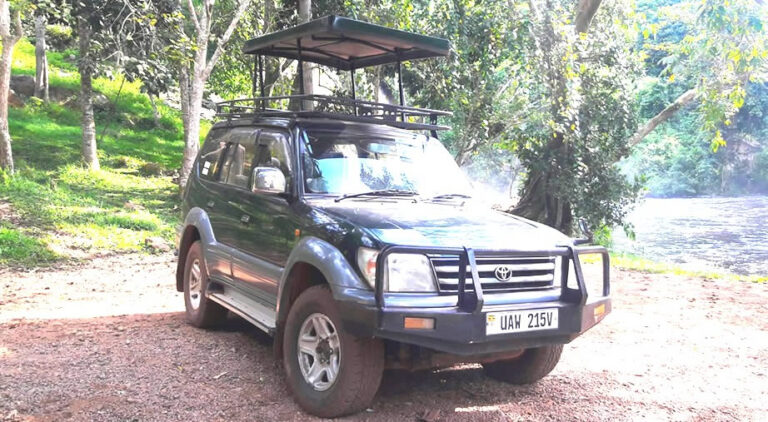
Toyota Land Cruiser Prado
Best For: Families, small groups, comfort
Passengers: 4–5
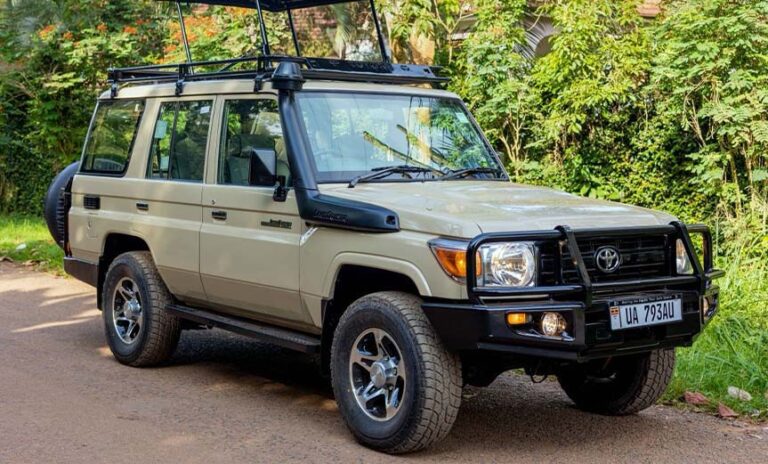
Safari Land Cruiser (pop-up roof
Best For: Guided safaris, game viewing en route
Passengers: 5–7

Land Cruiser w/ Rooftop Tent
Best For: Self-drive campers
Passengers: 2–4

4×4 Safari Minivan
Best For: Larger groups on a budget
Passengers: 6–10
What to Check Before You Rent
- Confirm the vehicle is genuine 4-wheel-drive (not just high-clearance 2WD) — essential for the Bwindi and Mgahinga approach roads.
- Ask whether unlimited mileage is included, since a full southwest circuit easily covers 900–1,200 km.
- Check that comprehensive insurance and 24-hour roadside recovery are included, particularly for self-drive.
- Confirm fuel policy (full-to-full is standard) and spare tyre / jack condition before departure.
- For self-drive, request a printed route map and offline GPS app recommendation — mobile signal is patchy beyond Kabale.
- If trekking during the wet season, request a vehicle with a snorkel/high air intake and good ground clearance.
What to Check Before You Rent
- Confirm the vehicle is genuine 4-wheel-drive (not just high-clearance 2WD) — essential for the Bwindi and Mgahinga approach roads.
- Ask whether unlimited mileage is included, since a full southwest circuit easily covers 900–1,200 km.
- Check that comprehensive insurance and 24-hour roadside recovery are included, particularly for self-drive.
- Confirm fuel policy (full-to-full is standard) and spare tyre / jack condition before departure.
- For self-drive, request a printed route map and offline GPS app recommendation — mobile signal is patchy beyond Kabale.
- If trekking during the wet season, request a vehicle with a snorkel/high air intake and good ground clearance.
Typical Driving Route & Times from Entebbe
- Entebbe → Kampala → Mbarara: 6 hours on tarmac
- Mbarara → Kabale: 2 hours, tarmac
- Kabale → Buhoma (via Ruhija): 2–3 hours, partly unpaved
- Kabale → Rushaga / Nkuringo: 1.5–2 hours, unpaved, steep
- Kabale → Mgahinga (Kisoro): 1.5 hours, mixed surface
Most self-drive travellers break the journey with an overnight stop around Lake Mburo National Park or Mbarara, arriving at their gorilla trekking lodge on day two, fresh for an early trekking start the next morning. Alternatively, a short scheduled flight from Entebbe to Kihihi or Kisoro airstrip cuts the transfer to under an hour, with a 4×4 transfer arranged at the airstrip for the final leg.
Ready to Trek? Let's Get You There.
From gorilla permits to your 4×4 and every night's stay in between — we handle the whole booking so you don't have to juggle three different suppliers.
- ✔ Gorilla permits secured through UWA
- ✔ Self-drive or chauffeur-driven 4×4 rental
- ✔ Lodges & campsites matched to your budget
Free quote within 24 hours. No hidden fees.


Recommended Gorilla Trekking Safari Packages
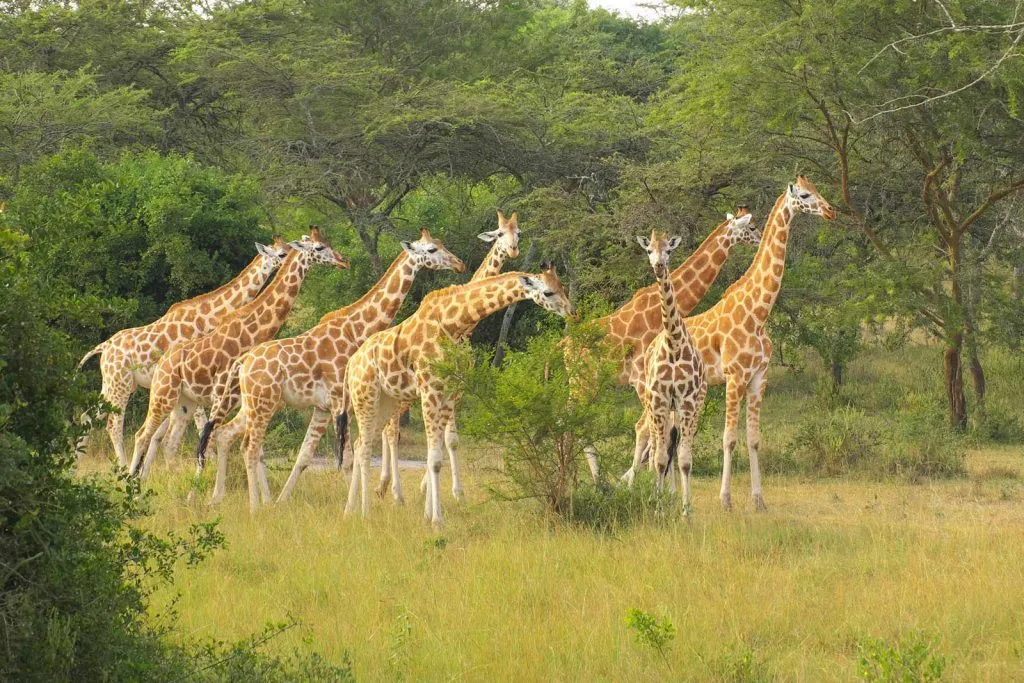
Below are our most-booked itineraries, each combining gorilla permits, 4×4 transport and accommodation. Every package can be customised — extended, shortened, upgraded to luxury lodges, or combined with wildlife, chimp trekking or Lake Bunyonyi.
3-Day Bwindi Gorilla Trekking Safari
- Day 1: Depart Entebbe/Kampala by 4×4, drive to Buhoma (approx. 8–9 hrs) via Mbarara and Kabale, with a lunch stop. Overnight in Buhoma.
- Day 2: Early briefing at the park office, gorilla trek (3–8 hours depending on location), certificate presentation, afternoon at leisure or community walk. Overnight in Buhoma.
- Day 3: Return drive to Entebbe, or connect to a domestic flight from Kihihi airstrip.
4-Day Gorilla Trekking & Lake Bunyonyi Safari
Adds a relaxing day on Lake Bunyonyi — Uganda’s most scenic lake, dotted with islands — before or after the trek.
- Day 1: Entebbe to Kabale by 4×4 (approx. 7 hrs), overnight on Lake Bunyonyi.
- Day 2: Morning canoe or boat excursion on the lake, afternoon transfer to Ruhija or Buhoma sector.
- Day 3: Gorilla trekking day, overnight near the trailhead.
- Day 4: Return drive to Entebbe.

6-Day Gorilla Trekking & Queen Elizabeth Wildlife Safari
Our most popular combination itinerary — pairs the primate trek with a classic savanna game drive and boat cruise.
- Day 1: Entebbe to Queen Elizabeth National Park by 4×4 (approx. 6–7 hrs).
- Day 2: Morning game drive (lion, elephant, buffalo, Uganda kob), afternoon Kazinga Channel boat cruise.
- Day 3: Drive to Bwindi via the scenic Ishasha sector (tree-climbing lions), overnight near Buhoma.
- Day 4: Gorilla trekking day.
- Day 5: Optional second trek, community walk, or Batwa cultural experience; drive toward Kabale.
- Day 6: Return to Entebbe or connect via domestic flight.
8-Day Gorilla, Chimpanzee & Big Game Grand Safari
For travellers who want the full Uganda experience — primates, predators and the source of the Nile — combining Kibale Forest chimp tracking, Queen Elizabeth, and Bwindi gorillas.
- Day 1–2: Entebbe to Kibale Forest, chimpanzee trekking in the forest.
- Day 3–4: Transfer to Queen Elizabeth NP, game drives and boat cruise.
- Day 5–6: Transfer to Bwindi via Ishasha, gorilla trekking day.
- Day 7: Second activity day — habituation experience, community visit, or Lake Bunyonyi.
- Day 8: Return drive/flight to Entebbe for departure.
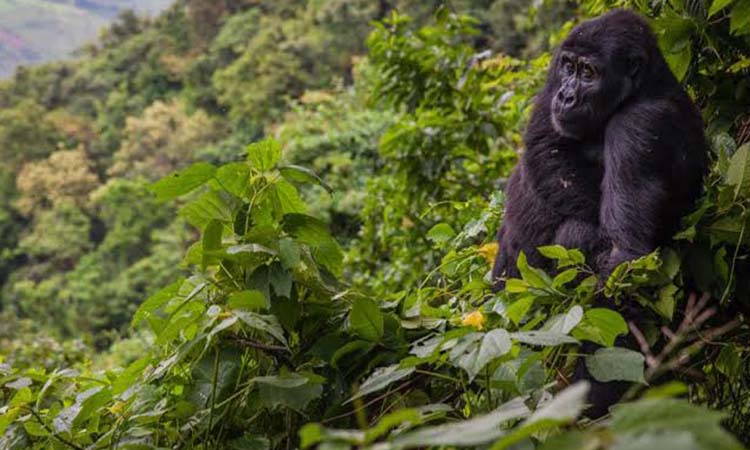
Self-Drive 4×4 Gorilla Adventure (Independent Travellers)
For confident, independent travellers who want to self-drive with full freedom, using our rooftop-tent-equipped 4×4 and staying in a mix of lodges and campsites.
- Day 1: Collect 4×4 in Entebbe, briefing on routes and vehicle, drive to Lake Mburo area, camp or lodge overnight.
- Day 2: Continue to Bwindi (Rushaga or Buhoma), overnight.
- Day 3: Gorilla trekking day.
- Day 4: Optional Mgahinga golden monkey trek or Lake Bunyonyi detour.
- Day 5: Self-drive return to Entebbe, vehicle drop-off.
Where to Stay — Lodging Options by Budget
Accommodation near the trailheads ranges from simple guesthouses to some of Africa’s most exclusive forest lodges. Because gorilla trekking mornings start early (briefing is typically 7:30–8:00 am), staying as close as possible to your assigned sector’s park office is strongly recommended.
Luxury Lodges
- Bwindi Lodge / Buhoma area — Forest-canopy suites with private decks, gourmet dining and spa treatments after your trek, typically $600–$900 per person per night, all-inclusive.
- Clouds Mountain Gorilla Lodge (Nkuringo) — Uganda’s original luxury gorilla lodge, stone cottages with fireplaces and panoramic Virunga views, from $700 per person per night.
- Gorilla Forest Camp / Sanctuary Gorilla Forest Camp — Tented luxury on the edge of the forest at Buhoma, from $550 per person per night.
- Chameleon Hill Lodge (Rushaga) — Colourful hilltop suites overlooking Lake Mutanda, from $450 per person per night.
Mid-Range Lodges
- Buhoma Community Rest Camp — Comfortable bandas run for community benefit, $120–$180 per person per night, half board.
- Ruhija Gorilla Friends Resort — Simple, comfortable rooms near the Ruhija trailhead, $100–$150 per person per night.
- Rushaga Gorilla Camp — Solid mid-range tented rooms a short drive from the Rushaga park office, $130–$190 per person per night.
- Lake Mutanda Resort (near Nkuringo) — Lakeside cottages with canoe access, $110–$170 per person per night.
Budget Guesthouses & Bandas
- Broadbill Forest Camp (Ruhija) — Simple bandas and dorm-style rooms from $35–$60 per person per night.
- Buhoma Community Bandas — Basic, clean rooms run by the local community, from $30–$50 per person per night.
- Nkuringo Gorilla Camp (budget wing) — Simple rooms with forest views, from $40–$70 per person per night.
- Kisoro town guesthouses (for Mgahinga) — A range of simple, clean guesthouses in town, from $20–$40 per person per night.
Because rooms near each trailhead are limited, especially in peak season, we recommend booking accommodation at the same time as your permit — availability at the closest lodges to your assigned sector can sell out well before the permits themselves do.
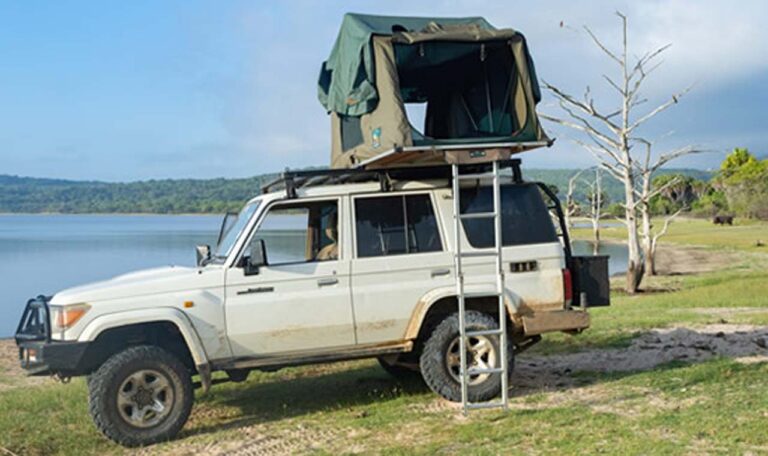
Self-Drive Rooftop Tent Camping
Our Land Cruiser rooftop tent rentals let self-drive travellers camp anywhere along the route — at established campsites, community campgrounds, or lodge grounds that allow overlanders to pitch for a small fee. Each vehicle comes equipped with a rooftop tent (sleeps 2), bedding, a camp table and chairs, a cooler box, basic cookware, and a 20-litre water container. This is the most flexible and budget-friendly way to combine self-drive freedom with the 4×4 you need for the terrain.
What to Know Before You Camp
- Nighttime temperatures in the Bwindi/Mgahinga highlands drop to 8–12°C — pack a warm sleeping bag even in the dry season.
- Most community campsites offer a simple breakfast/dinner service on request — arrange this on arrival.
- Book camping alongside your gorilla permit, as campsite capacity near popular sectors (especially Buhoma) is limited in peak months.
- If self-driving with a rooftop tent, arrive at your chosen site before dark — trailhead access roads are unlit and best driven in daylight.

What to Pack for Gorilla Trekking
Trekking Day Essentials
- Sturdy, worn-in hiking boots with ankle support and good grip
- Waterproof rain jacket (rain is possible even in dry season)
- Long-sleeved shirt and long trousers (light but tough fabric — protects against nettles and safari ants)
- Gardening gloves (very useful for gripping vines and branches on steep sections)
- Gaiters (highly recommended to keep ants and mud out of your boots)
- A 20–30 litre daypack, rain cover included
- 2 litres of drinking water and energy snacks
- A hat and sunscreen, plus insect repellent
- A basic first-aid kit and any personal medication
For the Wider Safari & 4×4 Journey
- Passport, yellow fever certificate, and printed permit confirmation
- Cash in US dollars (post-2006 notes) and Ugandan shillings for tips and small purchases
- A power bank / car charger, since remote lodges may have limited electricity hours
- Binoculars and a camera with a zoom lens (flash photography of gorillas is prohibited)
- A warm layer or fleece for cool highland evenings
- A reusable water bottle and a printed or offline map if self-driving
What to Expect on Trekking Day
Trekking day begins early. You will meet at your sector’s park headquarters for a 7:00–7:30 am registration, where rangers check permits and passports, and a briefing covers safety rules, gorilla etiquette and group assignments — each group of up to 8 trekkers is assigned to a specific habituated family.
From there, trackers who went ahead at dawn radio back the gorilla family’s location, and your ranger-guide leads the trek — anywhere from 30 minutes to 6–8 hours round trip, depending on how far the family has moved overnight. Porters are available to hire at the trailhead (highly recommended — they carry your bag, offer a steadying hand on steep sections, and the fee directly supports the local community).
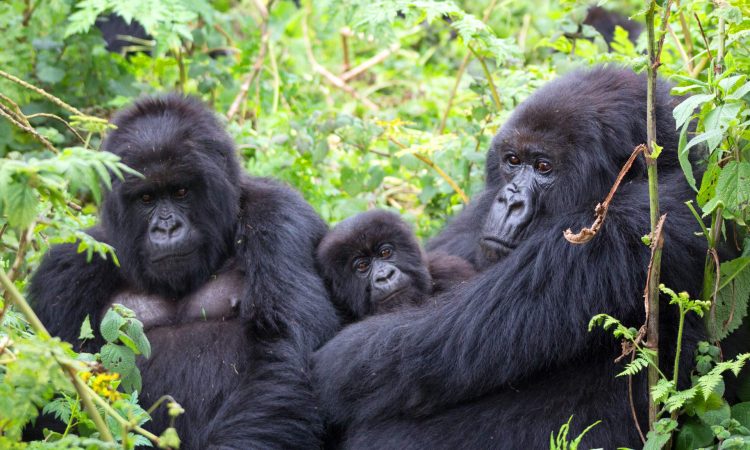
Once the family is located, you leave larger bags with the guide, approach quietly in small groups, and spend exactly one hour observing — watching mothers grooming infants, juveniles play-fighting, and the silverback keeping a watchful, usually indifferent, eye on the group. It is, for most visitors, the highlight of their entire trip to Africa. Afterwards, you receive a trekking certificate and return to your lodge for a well-earned rest.
Photography Tips for Your Gorilla Trek
Photographing gorillas in the low light of a rainforest understorey is genuinely challenging, and a little preparation goes a long way toward coming home with images you’re proud of.
- Bring a fast lens: something in the 70–200mm range with a wide aperture (f/2.8–f/4) handles Bwindi’s dim, dappled light far better than a slower telephoto or a phone camera alone.
- Raise your ISO with confidence: forest light rarely allows fast shutter speeds at low ISO — don’t be afraid to shoot at ISO 1600–3200 to freeze movement.
- No flash, ever: flash photography is strictly prohibited and can distress the gorillas; rely on natural light and a wide aperture instead.
- Protect your gear from moisture: a simple rain cover or dry bag for your camera is essential, particularly in the wet season or misty early mornings.
- Keep a free hand: trails are steep and often muddy — a chest harness or single-strap sling keeps your camera accessible without needing both hands.
- Shoot wide as well as tight: some of the most memorable gorilla images capture the animal within the forest environment, not just a close-up portrait.
- Charge everything the night before: many trailhead lodges have limited generator hours, so charge batteries and clear memory cards well ahead of your 6:00 am wake-up call.
Rules, Etiquette & Fitness Requirements
Park Rules for Gorilla Encounters
- ▪ Maintain at least 7–10 metres distance from the gorillas at all times.
- ▪ No flash photography — it can startle the animals.
- ▪ Keep your voice low and movements slow; never point directly at a gorilla.
- ▪ Do not trek if you have a cold, flu or any contagious illness — gorillas are highly susceptible to human respiratory diseases.
- ▪ Children under 15 are not permitted to trek.
- ▪ No eating, drinking or smoking in the immediate presence of the gorillas.
- ▪ Maximum group size per gorilla family is 8 trekkers, plus rangers and guides.
Fitness Level Required
Treks range from a gentle 30-minute walk to an 8-hour round trip over steep, muddy, high-altitude terrain (trailheads sit between 1,400m and 2,600m). A reasonable level of fitness is recommended for every sector, and hikers with mobility concerns should specifically request Buhoma's gentler trails and consider hiring a porter. Sedan chairs (a padded chair carried by four porters) are available on request for trekkers unable to walk the full distance.
Getting to Uganda & Travel Logistics
Flights & Entry Requirements
Most international travellers fly into Entebbe International Airport (EBB), served by direct or one-stop flights from major hubs in Europe, the Middle East and other African cities. A Uganda tourist visa (available online via the Uganda e-visa portal, or as part of the East Africa Tourist Visa covering Uganda, Kenya and Rwanda) and a valid Yellow Fever vaccination certificate are required for entry.
Reaching the Trekking Parks
It's worth building at least one buffer day into your itinerary around the international flight, since long-haul connections into Entebbe can occasionally run late, and a missed permit slot cannot be refunded once the trekking date has passed. Most experienced Uganda travellers also recommend arriving a day before your first activity rather than flying in and heading straight out on a long drive — a single night in Entebbe or Kampala lets you rest, exchange currency, and confirm final details with your driver-guide before the safari itself begins.
From Entebbe, most travellers either drive the full route by 4×4 (roughly 8–10 hours to Bwindi, broken into two days for comfort) or take a scheduled light-aircraft flight to Kihihi, Kisoro or Kayonza airstrip (around 1–1.5 hours), followed by a short 4×4 transfer to their lodge. Combining a scenic road journey on the way down — with stops at the Equator, Lake Mburo National Park, or the Igongo Cultural Centre — with a quicker return flight is a popular way to balance adventure with limited time.
Combining Gorilla Trekking With Other Uganda Highlights
- Queen Elizabeth National Park — classic savanna game drives, Kazinga Channel boat cruise, and the tree-climbing lions of Ishasha, en route between Bwindi and the rest of Uganda.
- Kibale Forest National Park — the world’s best chimpanzee trekking, easily paired with gorilla trekking on a longer 4×4 circuit.
- Lake Bunyonyi — a peaceful, malaria-free lake near Kabale, ideal for a rest day before or after your trek.
- Jinja & the source of the Nile — white-water rafting and adventure sports, best combined on a longer, multi-region itinerary.
- Mgahinga volcano hikes & golden monkey trekking — a natural add-on if you are trekking gorillas in the far south.
Frequently Asked Questions
How much does a gorilla trekking safari in Uganda cost in total?
A full package — permit, 4×4 transport, accommodation and meals — typically starts around US $1,100–$1,400 per person for a 3-day trip in a mid-range lodge, rising with longer itineraries, luxury lodges or private vehicle upgrades. Use the booking form above for a quote tailored to your dates and budget.
Do I need a 4×4 to reach Bwindi or Mgahinga?
Yes, for the final stretch of the journey a 4-wheel-drive vehicle is strongly recommended and, during the wet season, effectively essential. Standard 2WD vehicles frequently struggle or get stuck on the unpaved switchback roads into the trailhead areas.
Can I self-drive to gorilla trekking, or do I need a driver-guide?
Both are possible. Confident, experienced drivers can self-drive a rental 4×4, though most first-time visitors prefer a chauffeur-driven vehicle so a local driver-guide can handle navigation, checkpoints and road conditions while you relax and enjoy the scenery.
How fit do I need to be to trek gorillas?
A moderate fitness level is enough for most sectors, especially Buhoma. Treks can last anywhere from 30 minutes to 8 hours over steep, sometimes muddy terrain at altitude, so hikers with lower fitness or mobility limitations should choose Buhoma and consider hiring a porter or a sedan chair.
What is the best gorilla trekking sector for beginners?
Buhoma generally offers the gentlest trails and the widest range of accommodation, making it the most beginner-friendly sector, though gorilla movement each day means trek length can never be fully predicted in advance.
When should I book my gorilla permit?
For travel in the June–September or December–January peak periods, book 4–6 months ahead. For the quieter April–May and October–November months, 2–3 months’ notice is usually sufficient, though earlier booking always gives you the best choice of accommodation.
Can children go gorilla trekking?
Uganda Wildlife Authority requires trekkers to be at least 15 years old. Younger children can be looked after at most lodges, some of which offer babysitting services or nature walks, while parents trek.
Is gorilla trekking safe?
Yes. Treks are led by trained park rangers and armed guides, gorilla families are well habituated to respectful human presence, and incidents are extremely rare provided visitors follow the park’s distance and behaviour rules.
Can I combine gorilla trekking with a wildlife safari in the same trip?
Yes — this is the most popular way to visit Uganda. Queen Elizabeth National Park, Kibale Forest and Lake Mburo can all be combined with a Bwindi or Mgahinga gorilla trek on a single 4×4 road itinerary, as shown in our recommended packages above.
What happens if it rains on trekking day?
Treks go ahead in light-to-moderate rain — Bwindi is a rainforest, and rain is part of the experience. Only in cases of extreme weather affecting ranger and visitor safety would a trek be rescheduled, which UWA and our team would coordinate directly with you.
Should I rent a self-drive 4×4 or use a chauffeur-driven vehicle?
If you’re an experienced driver comfortable with manual transmission, right-hand drive and unpaved mountain roads, self-drive offers great value and flexibility. Most first-time visitors, and anyone travelling with family or on a tight schedule, get more out of a chauffeur-driven 4×4, since the driver-guide also acts as a local fixer, translator and safety net throughout the trip.
What happens if I don’t see the gorillas?
Sighting rates in Uganda are extremely high — well above 95% — because trackers are already following each habituated family before trekkers set off. In the rare event a group does not locate their assigned family, Uganda Wildlife Authority policy allows for a discounted or, in some cases, complimentary re-trek, which we can help coordinate on your behalf.
Ready to Trek? Let's Get You There.
From gorilla permits to your 4×4 and every night's stay in between — we handle the whole booking so you don't have to juggle three different suppliers.
- ✔ Gorilla permits secured through UWA
- ✔ Self-drive or chauffeur-driven 4×4 rental
- ✔ Lodges & campsites matched to your budget
Free quote within 24 hours. No hidden fees.