2027 Uganda Birding Guide: Best Birding Months, 4×4 Safaris, Camping & Lodges
Uganda is home to over 1,080 bird species—roughly 50% of Africa’s bird population and 11% of the global total. For independent birders and wildlife photographers, exploring Uganda on a self-drive basis offers complete control over your itinerary, early-morning departures, and prolonged time at hides and birding spots without being constrained by a group schedule.
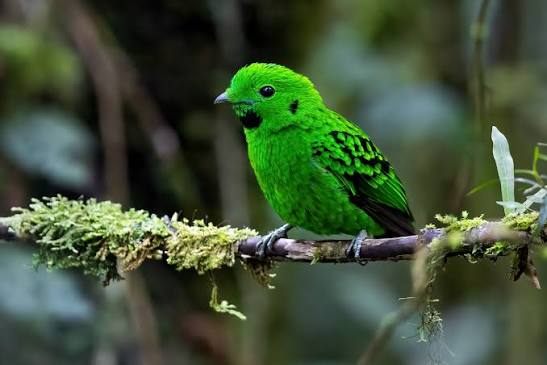
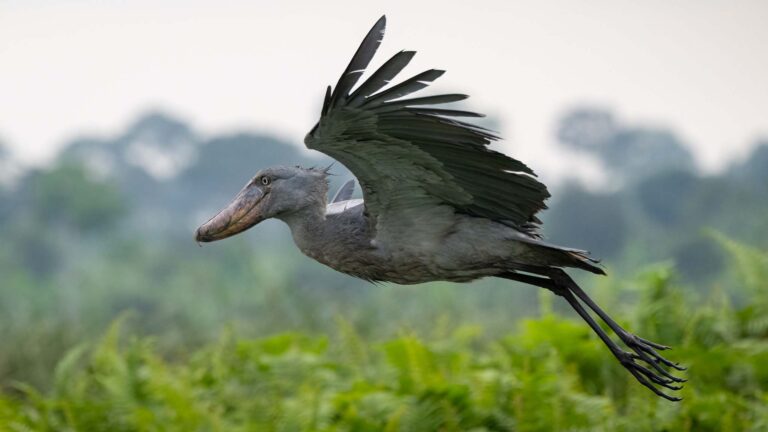
Whether your target is the legendary Shoebill, the Green Broadbill, or Albertine Rift endemics, this guide covers the core logistics for planning an independent 4×4 birding trip across Uganda.
Best Months for Self-Drive Birding in Uganda
Birdwatching in Uganda is rewarding year-round, but timing your trip depends on whether you prioritize Palaearctic migratory birds or favorable driving conditions on unpaved roads.
1. November to April (Peak Migratory Season)
- Highlights: Millions of Palaearctic and Intra-African migratory birds arrive, filling wetlands, lakeshores, and savannas. Many resident species are in full breeding plumage and call frequently, making them easier to detect.
- Self-Drive Considerations: Includes the “short rains” (November) and “long rains” (March–April). Forest tracks near Bwindi, Mabamba, and Semuliki become slick and clay-heavy, requiring engageable 4WD, high clearance, and low-range gearing.
2. June to August & December to February (Dry Seasons)
- Highlights: Drier forest trails make walking safaris inside Bwindi Impenetrable Forest, Kibale, and Budongo far less muddy.
- Self-Drive Considerations: Road conditions across northern routes (e.g., Murchison Falls to Kidepo Valley) are firm and easier to navigate. Wildlife and savanna birds congregate near remaining water sources.
Choosing the Right 4×4 Vehicle for a Self-Drive Safari
Navigating remote birding sites across national parks requires a capable 4×4 vehicle. Standard 2WD cars or compact crossovers are inadequate for unpaved forest access roads or sticky mud tracks.
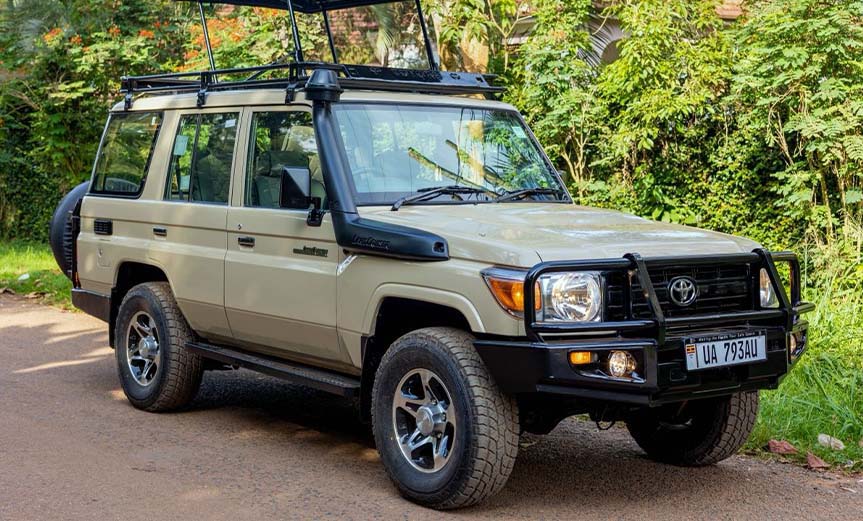
- Toyota Land Cruiser Hardtop / HZJ76 (Recommended): The gold standard for self-drive birding in Uganda. Features solid axles, high ground clearance, heavy-duty suspension, and optional pop-up roofs for elevated viewing in open savannas.
- Toyota Prado (TX/TZ): A comfortable mid-size SUV option. Ideal for pairs or solo birders, providing good fuel economy while handling standard park trails.
- Rooftop Tent Setups: Equipping a 4×4 Land Cruiser with a pop-up or rooftop tent allows you to camp right at park gates or remote forest stations, ensuring you are on-site at dawn when bird activity peaks.
Self-Drive Tip: Always request a vehicle with off-road all-terrain (A/T) tires, dual fuel tanks or extra jerrycans for remote stretches (such as Kidepo), and a full recovery kit (tow strap, jack, and sand ladders).
Camping vs. Lodges for Independent Birders
Self-drive travelers in Uganda can choose between self-contained camping and staying at fixed safari lodges. Combining both gives you maximum flexibility along your route.

Camping vs. Lodges for Independent Birders
Self-drive travelers in Uganda can choose between self-contained camping and staying at fixed safari lodges. Combining both gives you maximum flexibility along your route.
Wild Camping & Rooftop Tents
- Pros for Birders:
- Direct access to dawn chorus without driving from outside gates
- Cost-effective for long itineraries
- Complete itinerary flexibility
- Top Recommended Locations:
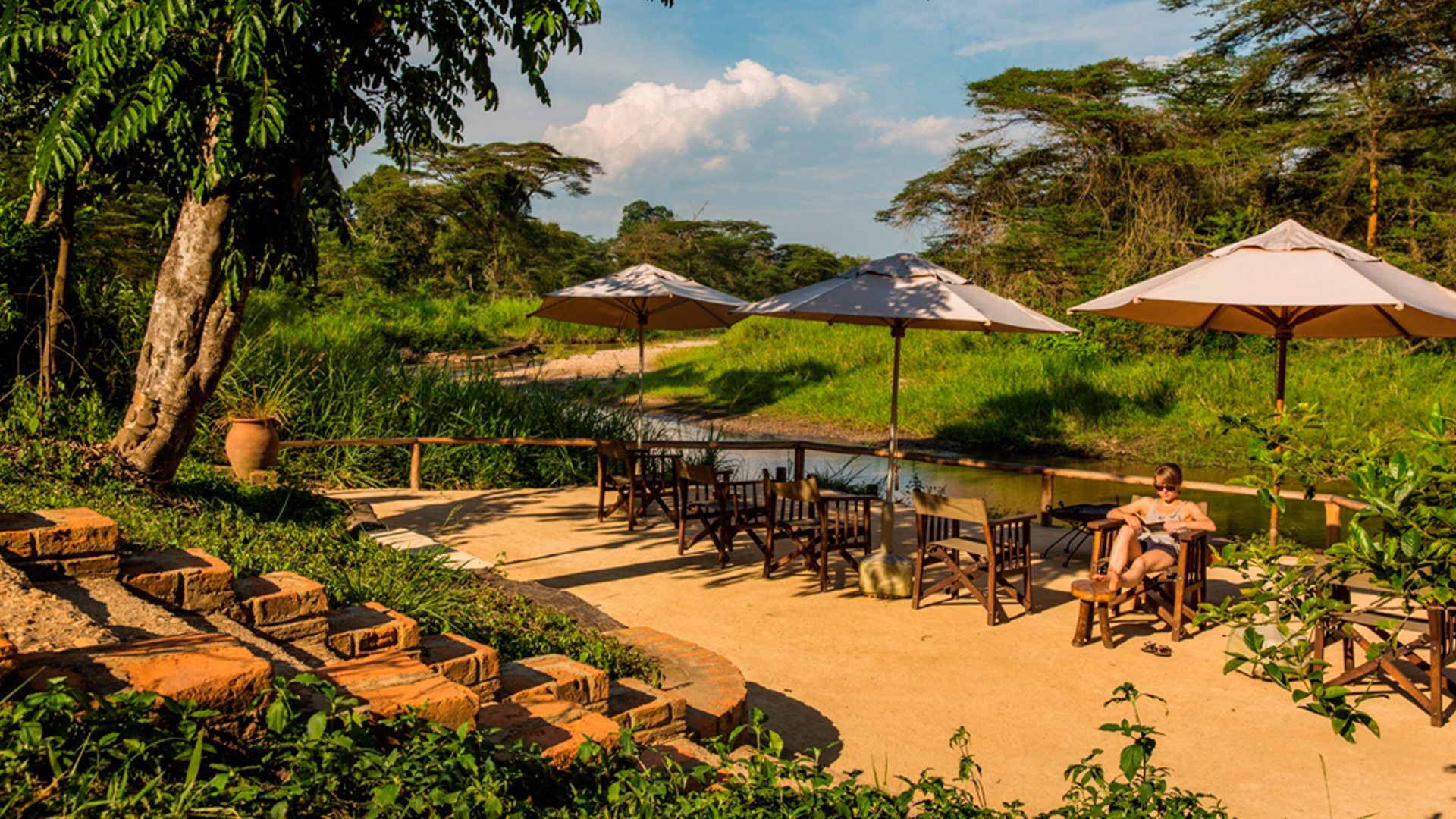
- Murchison Falls: Red Chilli Campsite & Delta Area
- QENP: Kasenyi & Ishasha Ntungwe Campsites
- Kidepo: Kakine Campsite
- Pros for Birders:
Mid-Range & Eco-Lodges
- Pros for Birders:
- Reliable power for charging cameras, laptops, and field gear
- Local guides available on-site
- Packed breakfasts for early departures
- Top Recommended Locations:
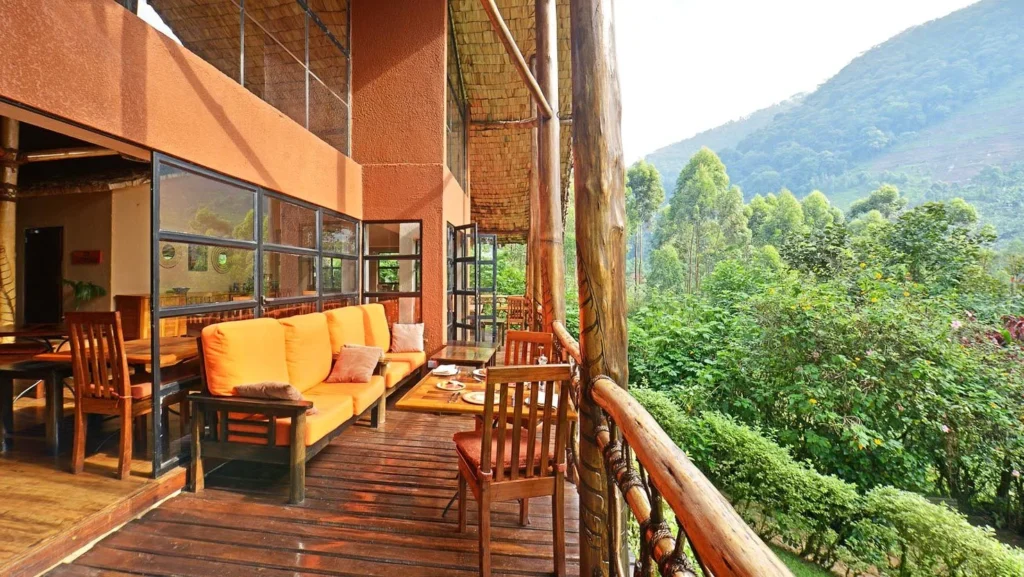
- Kibale Forest: Primate Lodge / Chimps’ Nest
- Bwindi: Broadbill Forest Camp (Ruhija)
- Mabamba: Eco-lodges near the bay
- Pros for Birders:
Top Uganda Birding Routes & Key Species
An optimal 10-to-14-day self-drive route circles Western Uganda, hitting diverse ecosystems from swamps and lowland tropical rain forests to high-altitude montane forests and savannas.
1. Mabamba Bay Wetland (Near Entebbe)
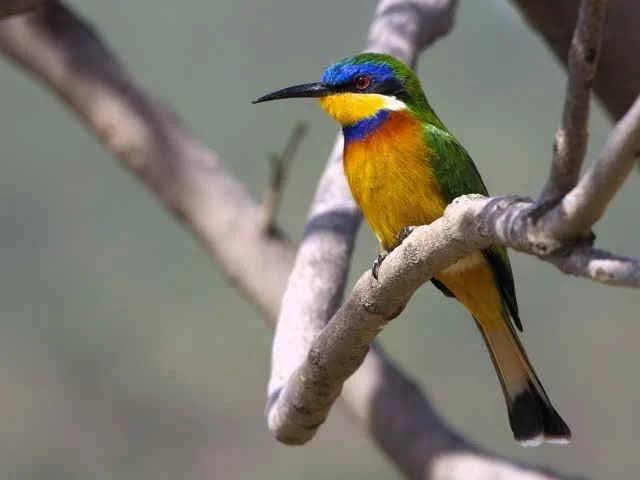
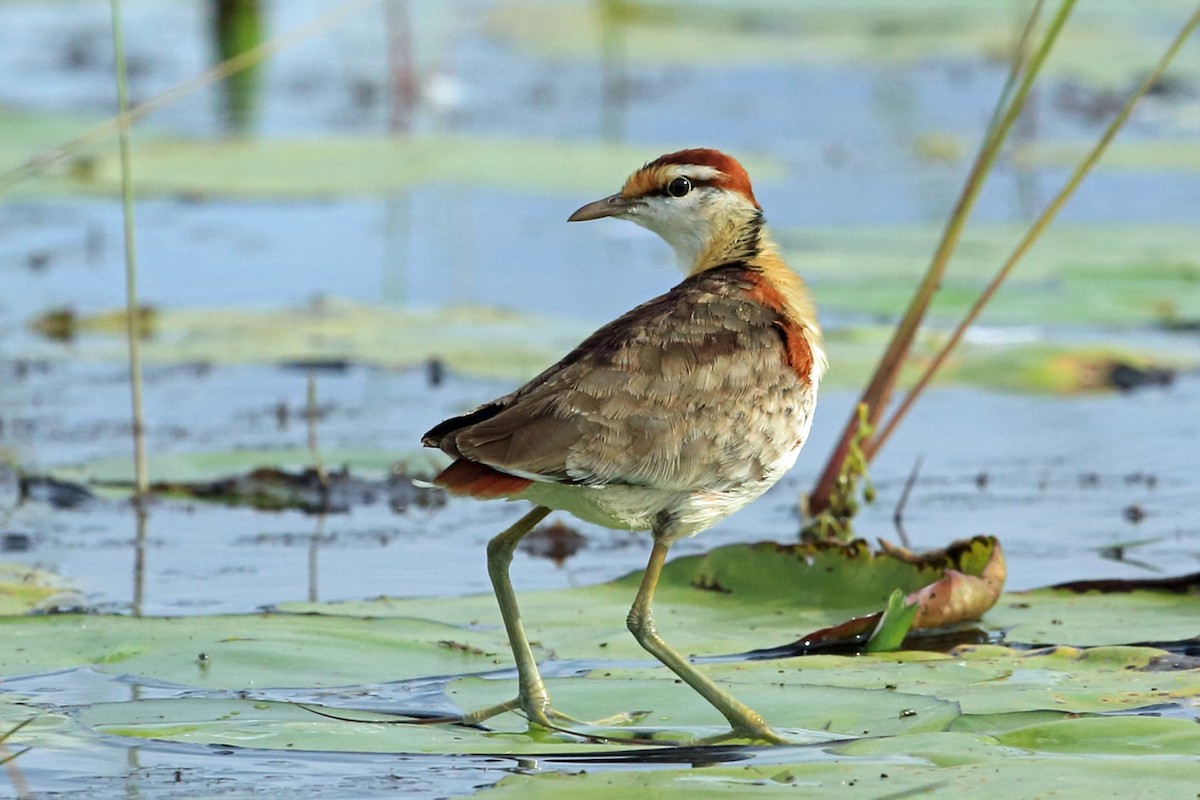
- Target Species: Shoebill (Balaeniceps rex), Lesser Jacana, Blue-breasted Bee-eater, Papyrus Gonolek, Purple Heron.
- Self-Drive Info: Located roughly 1.5 to 2 hours from Entebbe via the Nakiwogo ferry or direct drive through Kasanje. Drive to the landing site and hire a local wooden canoe with a local community bird guide to navigate the papyrus channels.
2. Budongo Forest (The Royal Mile)
- Target Species: Chocolate-backed Kingfisher, Ituri Batis, Nahan’s Francolin, Puvel’s Illadopsis, Dwarf Kingfisher.
- Self-Drive Info: Located inside the Budongo Forest Reserve near Masindi. The “Royal Mile” features a flat, wide forestry track ideal for slow driving and walking.
3. Kibale Forest & Bigodi Wetland Sanctuary
- Target Species: Green-breasted Pitta, Great Blue Turaco, Black-capped Apalis, Red-chested Owlet, Papyrus Canary.
- Self-Drive Info: Park at the Kanyanchu Visitors Center. The road through the forest is tarmac, but access tracks to surrounding crater lakes and Bigodi require a sturdy 4×4.
4. Bwindi Impenetrable National Park (Ruhija & Buhoma Sectors)
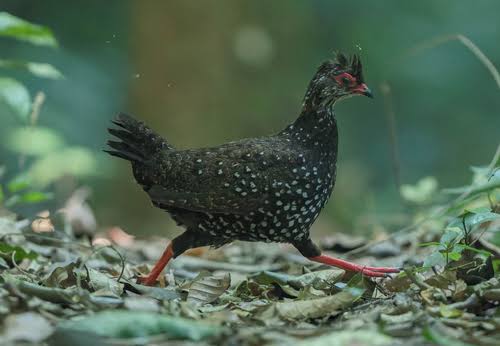
- Target Species: African Green Broadbill, Grauer’s Rush Warbler, Shelley’s Crimsonwing, Handsome Francolin, Regal Sunbird.
- Self-Drive Info: The mountain passes leading to Ruhija and Rushaga involve steep, winding dirt roads subject to landslides and thick mud during rain. A true 4×4 vehicle with good tire tread is mandatory here.
NextGen Safaris
5. Lake Mburo National Park
- Target Species: African Finfoot, Red-faced Barbet, Tabora Cisticola, Bare-faced Go-away-bird, Crested Francolin.
- Self-Drive Info: Compact and accessible park with well-maintained dirt tracks. Great initial or final stop on a self-drive circuit.
Essential Self-Drive Logistics for Birders
- Local Spotters & Site Guides: While self-driving gives you transit independence, hiring a local Uganda Wildlife Authority (UWA) or site-specific community guide at forest gates (such as Mabamba or Ruhija) significantly increases your chances of spotting skulking or rare species.
- GPS & Navigation Apps: Download offline mapping tools (e.g., Maps.me or Organic Maps) alongside Google Maps before heading out. Cellular reception can drop in deep valleys and dense forest reserves.
- Park Entry & Daily Permits: UWA requires payment for park entry via cashless methods (Visa, Mastercard, or mobile money) or pre-paid cards at designated offices. Ensure your vehicle entry fees are paid at the gate alongside individual daily entry.
- Timing Your Drives: Dawn birding requires passing through park gates right as they open (typically 6:00 AM). Stay inside the park boundaries or at gate-adjacent campsites to minimize transit time in the dark.
Ready to Start Your Uganda Birding Expedition?
Navigating Uganda’s tropical forests, mountain tracks, and remote wetland reserves requires a vehicle you can depend on. Drive yourself with complete independence, or hire a local driver-guide who doubles as a skilled navigator.