
Uganda + Rwanda Self-Drive 3 Itinerary Ideas
Uganda + Rwanda Self-Drive 3 Itinerary Ideas: A Complete Cross-Border Road Trip Guide: Gorilla Trekking, Volcanoes National Park, Nyungwe Forest, Lake Kivu & the Kazinga Channel
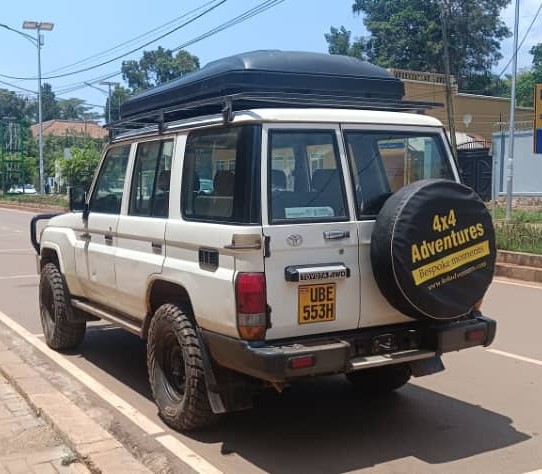
Uganda + Rwanda Self-Drive: Why Combine the Two Countries
Uganda and Rwanda sit side by side in the heart of the Albertine Rift, separated by nothing more than a short land border, a handful of immigration formalities, and roughly 60 to 100 kilometers of tarmac road depending on which crossing you choose. For self-drive travelers, this proximity is a gift: two entirely distinct safari cultures, two mountain gorilla populations, two capital cities with completely different personalities, and two dramatically different landscapes are all reachable in a single, continuous road trip behind the wheel of your own 4×4.
Uganda can absolutely be combined with Rwanda for travelers who want a wider East African experience, and a growing number of independent-minded safari-goers are choosing to do exactly that: picking up a well-equipped self-drive vehicle in Kampala or Entebbe, threading through Uganda’s savannah parks and rainforest primate reserves, crossing into Rwanda at one of several official land borders, and continuing the journey through the “Land of a Thousand Hills” all the way to Kigali, Lake Kivu, and the ancient canopy of Nyungwe Forest.
Self-driving this combined route delivers a level of freedom that guided group tours simply cannot match. You set your own pace at each viewpoint, linger an extra hour at the Kazinga Channel if the light is perfect, detour to a roadside crater lake that catches your eye, or stop in a small trading town for fresh produce and a conversation with local farmers. For travelers who want a genuine overland adventure rather than a scripted itinerary, self-driving Uganda and Rwanda together is one of the most rewarding road trips left in Africa.
That said, cross-border self-drive travel between Uganda and Rwanda is not something to improvise. Taking a rental vehicle across an international border is subject to vehicle eligibility, documentation, insurance, and advance approval, and the requirements differ meaningfully from simply driving around inside one country. This guide walks through everything you need to know: three fully developed self-drive itinerary ideas ranging from a compact 10-day loop to an ambitious 16-day grand circuit, plus a complete practical section on borders, paperwork, insurance, road conditions, and vehicle choice. Always tell your rental or safari operator about your full international itinerary before booking, so that the correct cross-border paperwork, insurance extension, and advance approval can be arranged well ahead of your departure date.
Cross-Border Self-Drive Essentials: What You Must Arrange in Advance
Crossing an international border in a self-drive rental vehicle is fundamentally different from crossing on foot or in a scheduled shuttle bus, and it is the single area of this trip that most first-time planners underestimate. Before confirming any Uganda + Rwanda self-drive itinerary, work through the following requirements with your vehicle rental company or safari operator.

- Vehicle Eligibility: Not every rental vehicle is permitted to leave Uganda, and not every vehicle that is permitted to leave is automatically insured or licensed to enter Rwanda. Cross-border-eligible 4×4 vehicles are typically a smaller subset of a rental company’s fleet, registered with the correct documentation for international movement and fitted with the recovery equipment (winch, extra spare tire, snorkel where relevant) that cross-border overland routes may require. Always confirm vehicle eligibility for cross-border use at the time of booking, not after your itinerary is finalized.
- Documentation: A self-drive cross-border trip requires a specific paperwork bundle that goes well beyond a standard domestic rental agreement. This typically includes the vehicle’s original logbook or a certified letter of authority from the rental company confirming the vehicle may leave Uganda, a cross-border permit or temporary import permit for Rwanda, the driver’s valid international driving permit alongside their home driving license, passports with sufficient validity and the correct visas or East Africa Tourist Visa, and in many cases a formal letter addressed to border officials confirming the purpose and dates of travel. Processing this documentation bundle can take one to two weeks, so early notice to your operator is essential.
- Insurance: Standard rental vehicle insurance policies in Uganda are almost never valid the moment a vehicle crosses into Rwanda. A separate cross-border insurance extension, sometimes referred to regionally as a COMESA Yellow Card or an equivalent regional motor insurance certificate, must be arranged in advance to provide third-party liability coverage while driving in Rwanda. Comprehensive coverage for the vehicle itself should also be confirmed explicitly for the Rwandan leg of the trip, as some domestic policies exclude cover once outside Uganda’s borders entirely.
- Advance Approval: Beyond paperwork and insurance, many rental and safari companies require formal advance approval of any cross-border self-drive plan, generally requested two to four weeks before departure. This approval process allows the operator to confirm the specific border post you intend to use, verify that the vehicle and driver meet all requirements on both sides of the border, and, where needed, pre-notify Rwandan customs and immigration of your vehicle’s temporary import. Because these requirements exist precisely to keep self-drive travelers moving smoothly through border posts rather than stuck in lengthy delays, always disclose your full international itinerary before booking, including every border crossing you plan to use and the approximate dates you expect to cross.
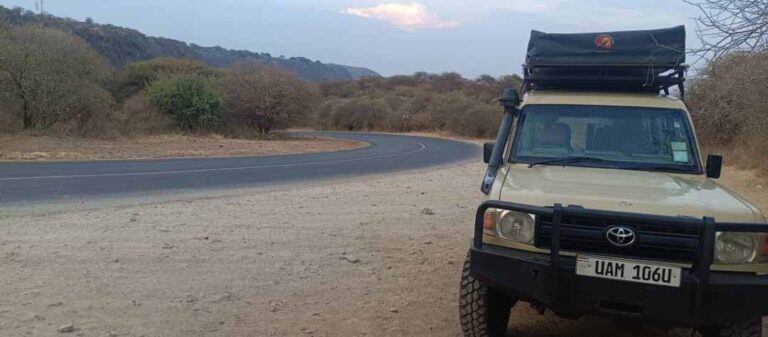
Choosing Your Border Crossing: Uganda–Rwanda Land Borders Explained
Uganda and Rwanda share several official land border posts, and which one you use will depend heavily on which of the three itinerary ideas below you follow. Understanding the main crossings in advance makes route planning significantly easier.
- Katuna (Uganda) / Gatuna (Rwanda): This is the primary and most heavily used border crossing between the two countries, positioned on the main highway route connecting Kabale in southwestern Uganda to Kigali. It is well-equipped with immigration and customs facilities on both sides and is the natural choice for travelers heading directly from the Lake Bunyonyi and Kabale area toward Kigali or Musanze (Ruhengeri), the gateway town for Rwanda’s Volcanoes National Park.
- Cyanika Border Post: A smaller, quieter crossing located directly between Kisoro in southwestern Uganda and Musanze in Rwanda. This crossing is particularly convenient for travelers doing gorilla trekking in Uganda’s Nkuringo or Rushaga sectors of Bwindi and then continuing directly to Volcanoes National Park without detouring through Kigali first, shaving significant driving time off a gorilla-focused itinerary.
- Kagitumba / Mirama Hills: Located further north, connecting the Mbarara–Kabale corridor of southwestern Uganda to northeastern Rwanda near Akagera National Park. This crossing suits itineraries that plan to visit Rwanda’s Akagera National Park, Rwanda’s own classic savannah reserve, before or after the Uganda leg of the trip.
Whichever crossing you plan to use, arrive well within official operating hours, carry all vehicle and personal documentation in an easily accessible folder, and expect the crossing process itself — covering immigration, customs, and vehicle clearance on both sides — to take approximately 45 minutes to 2 hours under normal conditions. Your operator’s advance approval process, discussed above, is specifically designed to minimize friction at whichever post you choose.
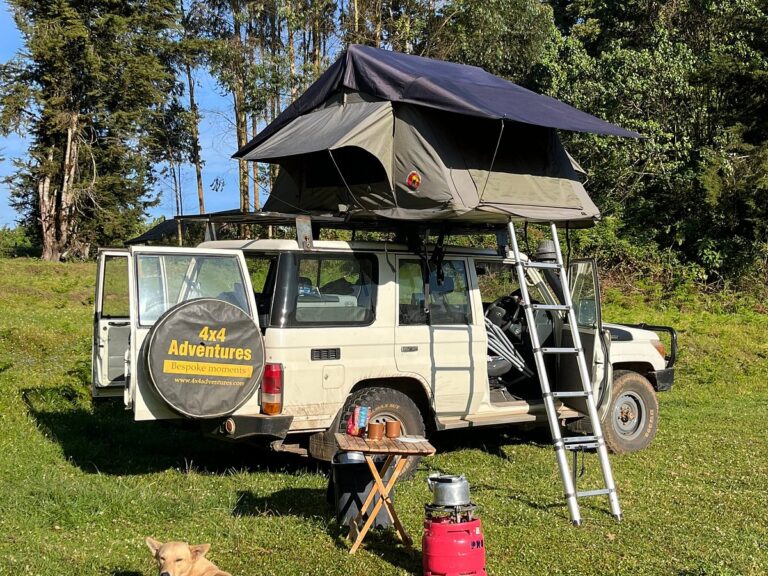
Why a Self-Drive Trip Beats a Guided Group Tour for This Route
Self-driving the Uganda + Rwanda circuit is not simply a cheaper alternative to a guided safari — for the right kind of traveler, it is genuinely a better way to experience this part of Africa. Here is what sets a self-drive itinerary apart.
- Total Flexibility on Timing: Linger at the Kazinga Channel for an extra sunset, or leave Lake Mburo an hour earlier to beat traffic through Mbarara — every decision is yours, with no group consensus required.
- Two Countries, One Continuous Road Trip: Rather than flying between destinations, you experience the full transition of landscape, culture, and language as the terrain shifts from Uganda’s rolling savannah to Rwanda’s dramatic volcanic hills.
- Privacy and Pace: A private vehicle means no shared itinerary with strangers, no waiting on slower travelers at rest stops, and the freedom to detour to a crater lake, market town, or viewpoint that catches your eye.
- Deeper Cultural Immersion: Stopping at your own pace in small towns, roadside markets, and local eateries along the route delivers a far more textured sense of daily life in both countries than a scripted group tour itinerary.
- Cost Efficiency for Small Groups and Families: For two to four travelers, a well-planned self-drive itinerary can be more cost-effective per person than an equivalent guided package, particularly on the accommodation and vehicle-hire side.
- Photography on Your Terms: Wildlife photographers in particular benefit enormously from being able to stop the vehicle instantly, wait as long as needed for the right light or animal behavior, and reposition freely without coordinating with a guide’s schedule.
Itinerary Idea 1: The Classic Gorillas & Volcanoes Self-Drive (10–12 Days)
This is the most popular and most efficient Uganda + Rwanda self-drive route, purpose-built around the two countries’ headline attraction: mountain gorilla trekking. It combines Uganda’s premier Southwestern Circuit with Rwanda’s Volcanoes National Park and the sophisticated charm of Kigali, using the Cyanika or Katuna/Gatuna border crossing to link the two halves of the trip.

Days 1–2: Entebbe / Kampala to Lake Mburo National Park
Collect your self-drive vehicle in Entebbe or Kampala, complete the vehicle handover and documentation check with your rental provider, and set off southwest toward Lake Mburo National Park. Break the drive at the Equator monument in Kayabwe for photographs, then spend the afternoon on a self-guided or ranger-escorted game drive through Lake Mburo’s acacia woodland, keeping an eye out for zebra, eland, and impala. Overnight at a lodge or tented camp overlooking the lake.
Days 3–4: Lake Mburo to Bwindi Impenetrable National Park
Continue southwest through the Ankole cattle country and into the increasingly dramatic terraced hills of the Kigezi Highlands, arriving at your chosen Bwindi sector (Rushaga and Nkuringo are ideal for this itinerary given their proximity to the Cyanika border crossing). On Day 4, complete your mountain gorilla trekking permit, hiking into the rainforest to spend an unforgettable hour with a wild gorilla family.
Day 5: Bwindi to Kisoro and the Cyanika Border Crossing
Drive the short but scenic route to Kisoro, in the far southwestern corner of Uganda, close beneath the outline of the Virunga volcanoes. Complete Ugandan exit formalities and cross into Rwanda at the Cyanika border post, then continue a short distance to Musanze (Ruhengeri), the gateway town for Rwanda’s Volcanoes National Park. This border-crossing day is intentionally kept light on driving distance to allow ample time for the immigration, customs, and vehicle-clearance process.
Days 6–7: Volcanoes National Park — Gorilla Trekking and Golden Monkeys
Spend two full days based in Musanze exploring Volcanoes National Park, home to the Rwandan side of the same Virunga mountain gorilla population found in Uganda. Track a second habituated gorilla family for a fascinating point of comparison with your Bwindi experience, then spend a second day tracking the endearing, acrobatic golden monkeys found in the park’s bamboo forest, or hiking partway up Bisoke or Karisimbi volcano for sweeping crater-lake views.
Days 8–9: Musanze to Kigali
Drive the well-maintained highway south to Kigali, Rwanda’s immaculate, hillside capital. Spend a full day exploring the city, including the deeply moving Kigali Genocide Memorial, the vibrant Kimironko Market, and the boutique galleries and cafés of the Kiyovu and Nyamirambo neighborhoods. Kigali’s reputation as one of Africa’s cleanest, safest, and most walkable capitals makes it an excellent final stop before returning the vehicle or continuing onward.
Days 10–12 (Optional Extension): Lake Kivu Relaxation
For travelers with extra time, extend the itinerary with two to three nights on the shores of Lake Kivu at Rubavu (Gisenyi) or Karongi (Kibuye), Africa’s sixth-largest lake and one of its most underrated relaxation destinations. Kayaking, boat cruises to Napoleon Island, and simply unwinding by the water make an ideal decompression stop before returning the vehicle in Kigali and flying home.
Itinerary Idea 2: Primates, Savannah & Lakes Explorer (11–13 Days)

Days 1–2: Kampala to Kibale Forest National Park
Depart Kampala and drive west via Fort Portal, pausing at the dramatic Fort Portal crater lakes en route, before arriving at Kibale Forest National Park, the primate capital of East Africa. Spend the following morning chimpanzee tracking among Kibale’s rainforest canopy, with excellent sighting rates and the chance to spot up to a dozen additional primate species along the trail.
Days 3–4: Kibale to Queen Elizabeth National Park
Drive south to Queen Elizabeth National Park via the Kichwamba Escarpment, arriving in time for an afternoon game drive across the Kasenyi Plains. On Day 4, take the classic Kazinga Channel boat cruise for close-up hippo, crocodile, and birdlife viewing, followed by a game drive through the southern Ishasha sector in search of the region’s famous tree-climbing lions.
Days 5–6: Queen Elizabeth to Bwindi Impenetrable National Park
Continue south into the Kigezi Highlands and arrive at Bwindi, choosing the Buhoma or Ruhija sector, both well-positioned for the eventual drive toward the Katuna/Gatuna border crossing. Spend Day 6 mountain gorilla trekking through Bwindi’s dense, ancient rainforest.
Day 7: Bwindi to Kabale and the Katuna/Gatuna Border Crossing
Drive to Kabale, a pleasant highland town near Lake Bunyonyi, one of Africa’s deepest lakes, ringed by terraced hills and small forested islands. If time allows, spend a few hours canoeing on Lake Bunyonyi before completing Ugandan exit formalities and crossing into Rwanda at the well-equipped Katuna/Gatuna border post, continuing on to Musanze or directly toward Nyungwe depending on driving time remaining.
Days 8–9: Musanze to Nyungwe Forest National Park
Drive south through Rwanda’s spectacular terraced hill country toward Nyungwe Forest National Park, one of Africa’s oldest surviving montane rainforests and a critical Albertine Rift biodiversity hotspot. Spend a full day here experiencing the renowned Nyungwe canopy walkway, a suspended bridge strung high above the forest floor offering extraordinary views over the canopy, alongside chimpanzee tracking and colobus monkey troops of several hundred individuals — among the largest primate groups in Africa.
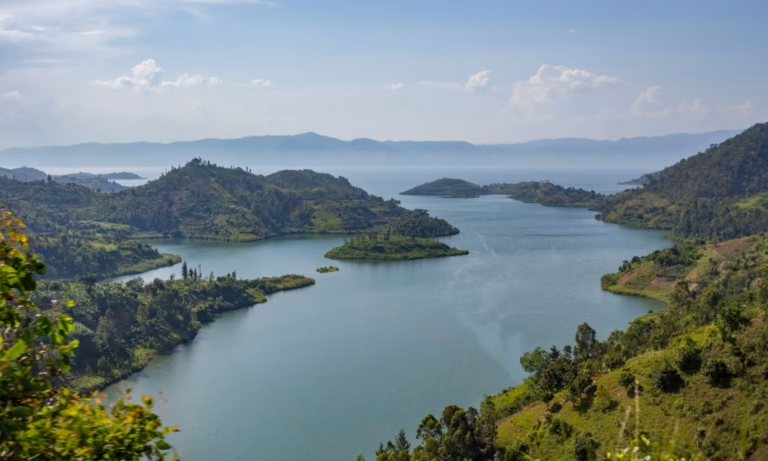
Days 10–11: Nyungwe to Lake Kivu (Karongi/Kibuye)
Continue north along the scenic Congo-Nile Trail route to Lake Kivu, stopping at Karongi (Kibuye) for a relaxed one to two nights on the lakeshore. This stretch of road ranks among the most scenic drives in the entire circuit, tracing the lake’s shoreline with constant views across the water toward the Democratic Republic of Congo.
Days 12–13: Lake Kivu to Kigali
Complete the final leg of the journey to Kigali, spending your last day or two exploring the capital’s memorials, markets, and dining scene before returning the self-drive vehicle and departing from Kigali International Airport, or arranging return transport back into Uganda if your rental agreement requires the vehicle’s return to Entebbe or Kampala.
For travelers with the time and appetite for the most comprehensive version of this trip, the Grand Loop combines nearly everything both countries have to offer: two savannah parks, two mountain gorilla treks, chimpanzee tracking, Rwanda’s Akagera National Park, the Nyungwe canopy walk, and a full loop around Lake Kivu, before returning to Uganda for a final stretch of relaxation. This itinerary uses the Kagitumba/Mirama Hills crossing on the outbound leg and Cyanika on the return, forming a genuine loop rather than an out-and-back route.
Days 1–3: Kampala to Murchison Falls National Park (Optional Northern Extension)
Travelers extending the Grand Loop northward begin with three days in Murchison Falls National Park, Uganda’s largest protected area, famous for the thunderous Nile waterfall that gives the park its name, excellent game drives across the northern savannah, and a launch cruise to the base of the falls. Travelers who prefer to stay strictly within the Southwestern and Rwandan circuit can skip this extension and begin directly at Lake Mburo.
Days 4–5: Kampala to Lake Mburo National Park
Depart Kampala (or Murchison Falls, looping back through the capital region) toward Lake Mburo National Park, stopping at the Equator crossing en route. Enjoy a walking safari and game drive across Uganda’s most underrated savannah reserve.
Days 6–7: Lake Mburo to Bwindi Impenetrable National Park
Continue into the Kigezi Highlands to Bwindi, choosing the Rushaga sector for its proximity to Rwanda and its access to the Gorilla Habituation Experience, a longer, more immersive four-hour alternative to the standard one-hour gorilla trek. Complete your Uganda-side gorilla trek on Day 7.
Day 8: Bwindi to Kisoro, Cyanika Border, and Musanze
Drive to Kisoro and cross into Rwanda via the Cyanika border post, continuing to Musanze to begin the Rwandan leg of the Grand Loop.
Days 9–10: Volcanoes National Park
Spend two days in Volcanoes National Park: a second mountain gorilla trek with a different habituated family on the Rwandan side of the Virunga range, followed by golden monkey tracking or a half-day hike toward one of the volcanic crater lakes on Mount Bisoke.
Days 11–12: Musanze to Nyungwe Forest National Park (via Kigali)
Drive south through Kigali, optionally stopping for a few hours to visit the Genocide Memorial and city markets, before continuing to Nyungwe Forest National Park. Spend a full day on the canopy walkway and chimpanzee or colobus monkey tracking through this ancient rainforest.

Days 13–14: Nyungwe to Akagera National Park
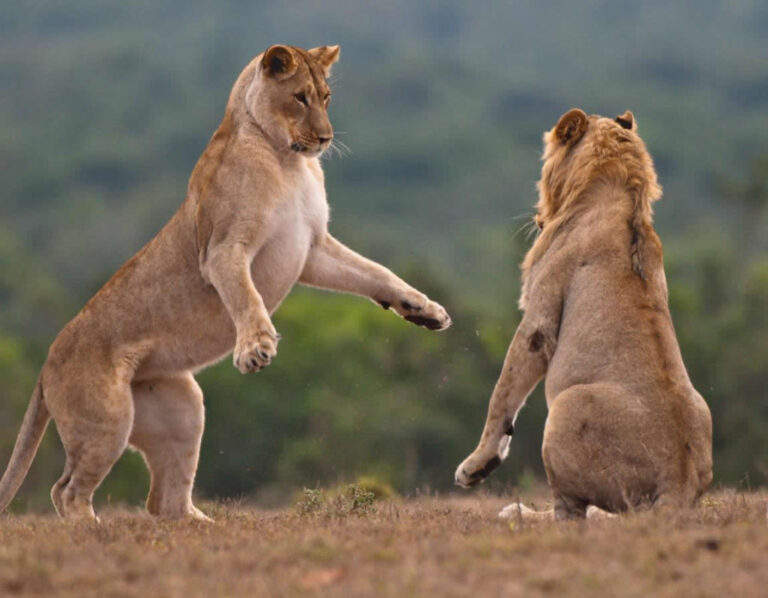
Cross Rwanda diagonally to reach Akagera National Park in the northeast, Rwanda’s own classic savannah reserve and one of Africa’s great conservation comeback stories, having rebuilt its lion and rhino populations after near-total loss during the 1990s. Spend a full day on game drives across Akagera’s savannah and wetland landscape, watching for lion, elephant, giraffe, and enormous hippo pods along the Kagera River and its chain of lakes.
Days 15–16: Akagera to Uganda via Kagitumba/Mirama Hills, and Return to Kampala
Complete the loop by crossing back into Uganda at the Kagitumba/Mirama Hills border post, driving north through Mbarara and back to Kampala or Entebbe to conclude the trip and return the self-drive vehicle, bringing the Ultimate Grand Loop full circle across two countries, six national parks, and two mountain gorilla treks.
Vehicle Choice and Road Conditions for a Uganda + Rwanda Self-Drive
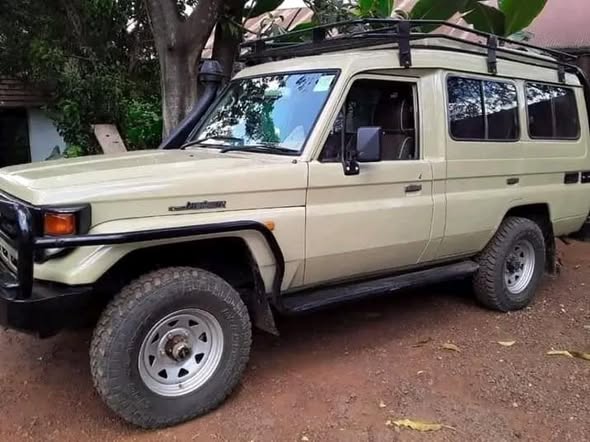
Choosing the right vehicle is one of the most important decisions in planning a Uganda + Rwanda self-drive itinerary. A robust 4×4 with high ground clearance is strongly recommended for the entire route, not just for the unpaved sections. While Uganda’s and Rwanda’s main highways connecting major towns are generally well-paved and well-maintained, the roads leading directly into national parks, lodge access tracks, and some rural stretches of the Kigezi Highlands remain unpaved, rutted, and occasionally steep, particularly during and immediately after the rainy seasons.
Popular self-drive vehicle choices include the Toyota Land Cruiser (both the classic hardtop and the more modern Prado), the Toyota RAV4, and pop-top or roof-tent-equipped 4×4 vehicles that double as both transport and accommodation for travelers wanting maximum flexibility on overnight stops. Manual transmission remains the norm for most rental fleets in the region, though automatic options are increasingly available and worth requesting specifically if that is your preference.
Rwanda’s roads, particularly around Kigali and the main highway corridors, are noticeably smoother and better maintained than much of rural Uganda, a reflection of the country’s significant infrastructure investment over the past two decades. That said, the roads through Rwanda’s western hill country toward Lake Kivu and Nyungwe Forest involve near-constant switchbacks and steep gradients, so a comfortable, well-serviced vehicle with reliable brakes is essential regardless of which of the three itineraries you follow.
Both Uganda and Rwanda drive on the left-hand side of the road, so travelers accustomed to right-hand traffic should factor in an adjustment period, particularly on the first day or two behind the wheel. Fuel stations are plentiful along all major routes in both countries, but become considerably sparser inside and immediately around national park boundaries, so it is wise to top up the tank at every opportunity in larger towns such as Mbarara, Kabale, Kisoro, Musanze, and Kigali before continuing into more remote stretches of the itinerary.




Ready to hit the road? Book your 4x4 vehicle for this Uganda + Rwanda self-drive adventure, or let an experienced safari guide join you for expert wildlife spotting, smoother border crossings, and local insight every mile of the way.
Best Time of Year for a Uganda + Rwanda Self-Drive Safari
Both Uganda and Rwanda share a broadly similar climate pattern, split between two dry seasons and two rainy seasons, which makes timing decisions relatively straightforward regardless of which of the three itineraries above you choose.
The dry seasons, running roughly from June to September and again from December to February, are the best overall windows for a self-drive trip. Roads throughout both countries are in their best condition during these months, trekking trails in Bwindi, Volcanoes, and Nyungwe are far less muddy and considerably easier underfoot, and savannah game viewing in Lake Mburo, Queen Elizabeth, and Akagera tends to be at its most productive, as wildlife concentrates around remaining water sources and shorter grass improves visibility. These periods are also, unsurprisingly, the busiest for gorilla permits in both countries, so early booking is essential.
The rainy seasons, from roughly March to May and October to November, bring lush, vividly green landscapes across both countries, dramatically quieter parks and roads, and often better availability for gorilla permits and lodge bookings, sometimes with reduced rates at certain properties. The trade-off is muddier, occasionally more challenging driving conditions on unpaved sections, particularly the roads leading into Bwindi’s more remote sectors and some of the steeper switchback routes around Nyungwe and Lake Kivu — another strong argument for choosing a genuine 4×4 with good clearance rather than a standard sedan or soft-roader.
Whichever season you choose, self-drive travelers should build a small buffer of flexibility into border-crossing days specifically, since unpaved approach roads can add unpredictable time to a day’s driving during the wetter months, and border-post processing can occasionally run longer than expected regardless of season.
Permits, Fees, and Budgeting for a Two-Country Self-Drive
Budgeting accurately for a Uganda + Rwanda self-drive trip means accounting for costs on both sides of the border, several of which differ meaningfully in price between the two countries. Mountain gorilla trekking permits in Uganda’s Bwindi Impenetrable National Park are priced at approximately 800 USD per person for foreign non-residents, while Rwanda’s equivalent Volcanoes National Park permits are considerably higher, typically around 1,500 USD per person, reflecting Rwanda’s deliberate high-value, low-volume conservation tourism strategy. Travelers doing both itinerary ideas that include a gorilla trek in each country, such as Itinerary Idea 1 or the Grand Loop in Itinerary Idea 3, should budget for both permit costs accordingly.
Chimpanzee tracking permits in Uganda’s Kibale Forest National Park run approximately 200 USD per person, while Rwanda’s Nyungwe Forest chimpanzee tracking permits are typically priced somewhat higher, generally in the 100 to 150 USD range depending on season and community, alongside separate permits for the Nyungwe canopy walkway (a modest additional fee, generally under 100 USD per person) and colobus monkey tracking.
National park entrance fees in both countries generally fall in the 40 to 100 USD per person per day range depending on the specific park, with Akagera and Volcanoes National Parks in Rwanda sitting toward the higher end of that scale. Vehicle rental for a cross-border-eligible 4×4, inclusive of the necessary cross-border documentation and insurance extension, typically commands a premium over standard domestic-only rental rates, reflecting the additional paperwork, vehicle preparation, and insurance coverage required.
As a rough planning framework, a two-person self-drive trip following Itinerary Idea 1 (10–12 days, one gorilla trek per country) should budget in the region of 6,000 to 9,000 USD per person inclusive of permits, vehicle rental, fuel, accommodation, and park fees, though costs vary considerably based on accommodation standard and the specific vehicle chosen. Itinerary Idea 2, which trades one Rwandan gorilla trek for the Nyungwe canopy walk and additional Uganda time, generally runs somewhat lower given the single gorilla permit involved. The full Grand Loop in Itinerary Idea 3, with two gorilla treks, Akagera, and the northern Murchison Falls extension, should be budgeted at the higher end of this range or above, particularly for travelers adding the optional Murchison Falls segment.
Documents and Packing Checklist for the Border Crossing
Beyond the standard packing considerations for any Uganda or Rwanda safari, such as sturdy trekking boots, rain gear, insect repellent, and neutral-toned clothing for primate trekking, a self-drive cross-border trip demands its own dedicated documentation checklist that should be assembled well before departure day.
Essential documents to carry at all times, ideally in a single, easily accessible folder, include: valid passports with at least six months’ remaining validity and the correct visas (many travelers use the East Africa Tourist Visa, which covers Uganda, Rwanda, and Kenya on a single multiple-entry visa, and is specifically designed with exactly this kind of regional overland trip in mind); an international driving permit alongside your home country driving license; the vehicle’s registration and logbook or the rental company’s certified letter of cross-border authority; proof of the cross-border insurance extension (COMESA Yellow Card or equivalent); printed copies of your gorilla and chimpanzee trekking permit confirmations for both countries; and any advance approval documentation or reference numbers issued by your rental or safari operator ahead of the crossing.
It is also wise to carry small amounts of both Uganda Shillings and Rwandan Francs in cash, since border-area services, small fees, and rural stops do not always accept cards or US dollars, alongside a basic vehicle emergency kit (spare tire, jack, warning triangle, first-aid kit, and a printed hard-copy map as backup to phone-based navigation, since mobile signal can be unreliable in remote stretches of the Kigezi Highlands and western Rwanda).
Finally, keep a physical or digital copy of your full itinerary, including every planned border crossing and approximate crossing dates, readily available. This is precisely the information your rental or safari operator will already have on file from the advance-approval process, and having it on hand yourself makes any conversation with border officials considerably smoother.
Frequently Asked Questions About Uganda + Rwanda Self-Drive Trips
Q: Can I drive a Ugandan rental car into Rwanda myself?
A: Yes, but only with a vehicle specifically approved for cross-border use, the correct cross-border documentation, an insurance extension valid in Rwanda, and advance approval from your rental provider. Standard domestic-only rental agreements typically do not permit the vehicle to leave Uganda, so always confirm cross-border eligibility and disclose your full international itinerary at the time of booking.
Q: Which border crossing is best for a gorilla-focused itinerary?
A: The Cyanika border post, between Kisoro (Uganda) and Musanze (Rwanda), is the fastest and most direct route for travelers going straight from Bwindi’s Nkuringo or Rushaga sectors to Rwanda’s Volcanoes National Park, minimizing extra driving time between the two gorilla trekking destinations.
Q: Do I need separate gorilla permits for Uganda and Rwanda?
A: Yes. A Uganda gorilla trekking permit and a Rwanda gorilla trekking permit are entirely separate products, priced differently, issued by different wildlife authorities, and booked independently. Travelers wanting to trek gorillas in both countries, such as on Itinerary Idea 1 or the Grand Loop, need to purchase and book both permits.
Q: How long does the border crossing itself typically take?
A: Under normal conditions, budget approximately 45 minutes to 2 hours for a self-drive cross-border crossing, covering passport control, customs, and vehicle clearance on both sides. Arriving with complete, well-organized documentation, arranged in advance through your operator’s approval process, is the single biggest factor in keeping this time on the shorter end.
Q: Is it safe to self-drive in Uganda and Rwanda?
A: Both countries are generally considered safe and increasingly popular for self-drive tourism, with Rwanda in particular renowned for excellent road infrastructure and low crime rates. Standard road-trip precautions apply: avoid driving after dark on rural roads where possible, keep valuables out of sight, and always carry your documentation folder with you.
Q: Which of the three itineraries is best for a first-time visitor?
A: Itinerary Idea 1, the Classic Gorillas & Volcanoes Self-Drive, is generally the best starting point for first-time visitors, offering a focused, achievable 10 to 12-day route that hits both countries’ headline gorilla trekking experiences without the added complexity of Akagera or a northern Uganda extension.
Q: Can I do this trip in the rainy season?
A: Yes, self-driving both countries year-round is entirely feasible, though the rainy seasons (March–May and October–November) bring muddier unpaved sections, particularly around Bwindi’s more remote sectors and the switchback roads near Nyungwe and Lake Kivu. A genuine 4×4 with good ground clearance is strongly recommended in any season, but especially during the rains.
Q: Do I need the East Africa Tourist Visa for this trip?
A: The East Africa Tourist Visa, covering Uganda, Rwanda, and Kenya on a single multiple-entry visa, is specifically designed for exactly this kind of regional overland trip and is generally the most convenient visa option for travelers planning a Uganda + Rwanda self-drive itinerary, though requirements vary by nationality and should always be confirmed directly ahead of travel.
Q: How much driving is involved per day on average?
A: Most days across all three itineraries involve 2 to 5 hours of driving, with a small number of longer transfer days (particularly the Bwindi-to-Nyungwe and Musanze-to-Akagera legs) running closer to 6 to 7 hours including stops. None of the three itineraries are designed as pure driving marathons; each builds in substantial time at parks and lodges relative to time on the road.
Q: What happens if my cross-border approval or documentation is incomplete?
A: Incomplete documentation is the most common cause of delays or, in some cases, refused entry at the border. This is precisely why advance approval and full disclosure of your international itinerary to your rental or safari operator, ideally two to four weeks before departure, is treated as a mandatory step rather than an optional formality.
Q: Can I extend either itinerary to include Akagera or Murchison Falls even if I only have 10 days?
A: It is possible but tight. Adding Akagera National Park or the Murchison Falls extension generally adds 3 to 4 days to whichever base itinerary you choose, so travelers with only 10 days available are usually better served by Itinerary Idea 1, saving Akagera or Murchison Falls for a future return trip rather than compressing an already full route.
Q: Is it cheaper to rent the vehicle in Uganda or in Rwanda?
A: For a Uganda + Rwanda self-drive loop, it is almost always more practical, and typically more cost-effective, to rent a cross-border-eligible vehicle in Uganda and drive it through both countries, rather than renting separately in each country and arranging a border-to-border vehicle swap, which adds unnecessary cost, complexity, and lost travel time.
Practical Driving Tips for Uganda and Rwanda
Beyond the paperwork and vehicle choice, a handful of practical, on-the-ground driving habits will make the Uganda + Rwanda self-drive experience considerably smoother, particularly for travelers who have not previously driven in East Africa. Local driving culture, road signage, and traffic patterns differ meaningfully from what many international visitors are used to, and a short adjustment period is normal and expected.
Speed and following distance deserve particular attention on Uganda’s main highways, where boda-boda motorcycles, bicycles, pedestrians, and livestock frequently share the road shoulder with fast-moving vehicles, sometimes with little warning. Maintaining a moderate speed through trading towns and villages, and being prepared for sudden stops, is essential safe-driving practice throughout rural Uganda. Rwanda’s roads are generally more disciplined and better marked, with clearly enforced speed limits and a noticeably lower incidence of livestock or informal roadside activity directly in the carriageway, though the same general caution applies on mountain switchback sections.
Night driving should be avoided wherever possible in both countries, particularly on rural and unpaved stretches. Road markings, shoulder edges, and oncoming traffic (including unlit bicycles and pedestrians) are considerably harder to judge safely after dark, and most lodges and self-drive itineraries are planned specifically to have travelers arrive at each night’s accommodation well before sunset. Building this buffer into your daily schedule, rather than treating arrival times as flexible, is one of the simplest ways to keep a self-drive trip both safe and relaxed.
Police and traffic checkpoints are a routine feature of road travel in both countries, generally brief and straightforward provided your documentation is in order. Slow down, greet the officer politely, and have your license, vehicle documents, and (where relevant) cross-border paperwork within easy reach. These stops are rarely more than a two-to-three-minute formality for travelers with complete documentation, reinforcing once again why the advance-approval and paperwork process described earlier in this guide matters well beyond the border crossing itself.
Finally, fuel planning deserves a specific mention for the more remote legs of all three itineraries, particularly the stretches between Kisoro and Musanze, and between Nyungwe Forest and Akagera National Park in Rwanda. While fuel stations are common in larger towns, they thin out considerably in national park areas and along some of the more scenic but sparsely populated back roads. A simple rule of thumb followed by experienced self-drive travelers in the region is to treat a half-full tank as the point to start looking for the next fuel stop, rather than waiting until the tank runs low, particularly before entering any of the six national parks featured across these three itineraries.
Conclusion: Plan Your Uganda + Rwanda Self-Drive Adventure
A self-drive trip across Uganda and Rwanda offers something genuinely rare in modern African travel: the freedom of an independent road trip layered directly on top of two of the continent's most rewarding wildlife and primate destinations. Whether you choose the focused, gorilla-centered pace of Itinerary Idea 1, the primate-and-lakes depth of Itinerary Idea 2, or the full two-country ambition of the Grand Loop in Itinerary Idea 3, the combination of Uganda's raw, textured landscapes and Rwanda's polished infrastructure and conservation success story makes for an extraordinary journey behind the wheel.
The most important step in making any of these three itinerary ideas a reality is early, thorough planning of the cross-border logistics: vehicle eligibility, documentation, insurance, and advance approval. None of these requirements are designed to complicate your trip — they exist to make sure your border crossing, wherever you choose to make it, is smooth, predictable, and stress-free, leaving you free to focus on what actually matters: the gorillas, the chimpanzees, the volcanoes, the lakeshores, and the open road connecting them all.
Uganda can be combined with Rwanda for travelers who want a wider East African experience, and a self-drive itinerary is one of the most flexible, immersive ways to do it. Always tell your rental or safari operator about your full international itinerary before booking, and start planning your Uganda + Rwanda self-drive adventure today.
Ready to hit the road? Book your vehicle or secure your expert guide for the journey: